Posted

Now that the web is nudging all of us photographers to create more than just stills to deliver our message we who work on location in remote areas are faced with the prospect of adding more equipment to the heavy packs we have been carrying for years!

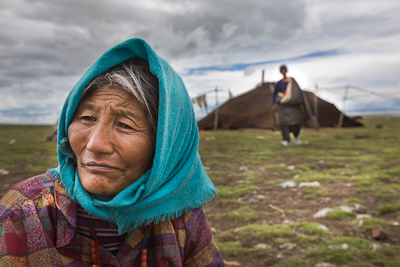
Last year I traveled to Malawi, Zambia, Sri Lanka, Peru, India and Tibet to create short multimedia pieces for my ongoing project focusing on the empowerment of women and girls in the developing world. 

In addition to my Canon 1Ds Mark III and various lenses (16-35mm f 2.8;  70-200mm f 2.8;  28-70mm f 2.8;  24mm f1.4)   I was now carrying a Sony PMW-EX1 Camcorder; a Marantz 661 field DAT recorder; shotgun; omnidirectional; and wireless laviler microphones plus the tripod, lights, headphones, etc.

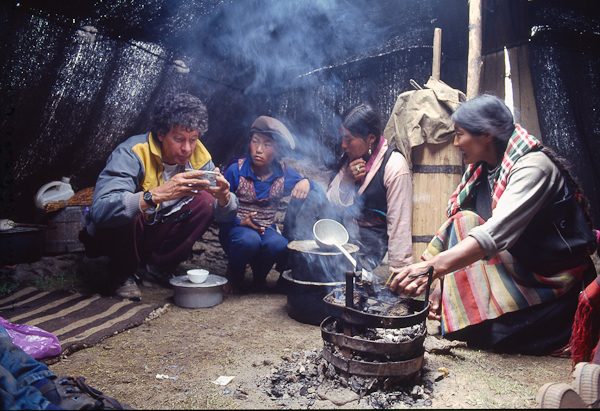
As you may have seen in a previous blog post, here is what it looked like on one of my trips to Tibet!! 
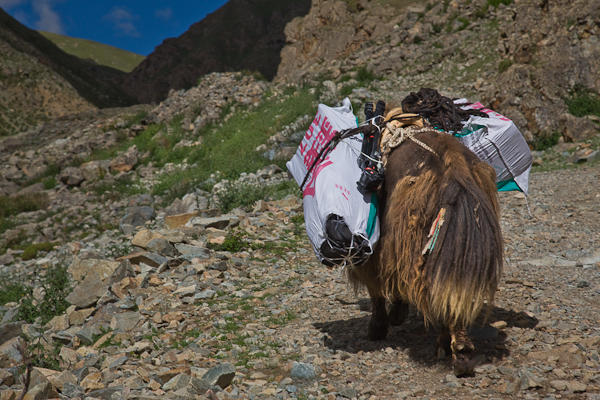
 

Not only is it a lot of weight that sometimes requires a Yak but in instances like this it makes getting to the equipment quickly a major problem—so much for spontaneity.

I’m on my way to Northern Mexico to do a story on maternal mortality among the Tarahamara Indians living in the Copper Canyon near Chihuahua.  Here is what I’ve decided to do to lighten my load.

One of the great advantages of digital photography is the ability to shoot in low light.  Instead of lugging around my heavy Lumedyne packs, batteries, and light heads I now just carry a Canon 580ez .   In fact, I hardly light anymore and create my highlights in post production (shooting HDR and using the brush tool in Lightroom – see below)  This has helped to lighten my load a lot.
My time in Mexico will determine whether I will replace my Canon Mark III 1Ds with a Mark II 5D to shoot both stills and video when needed.  Though the 5D does needs a few add-ons to make it functional as a video camera.   First, a Z-Finder from Zucuto is a must for getting accurate focus.  Secondly, the Automatic Gain Control on the 5D makes it impossible to record a decent sound track.  More on this in my next blog. 

We are all waiting for the promised firmware upgrade for the 5D that will allow a 24 frame per second frame rate.  Right now I’m not looking to use the 5D to completely replace my Sony EX1 but as I get used to shooting my interviews and B roll with it, I’m looking to the future and hoping I’ll be able to leave my EX1 at home.  The new Canon Mark IV will make high ISO still and video shooting even more available and I assume it won’t be long before these new SLR cameras will be built more ergonomically to allow for easier video shooting.
Posted

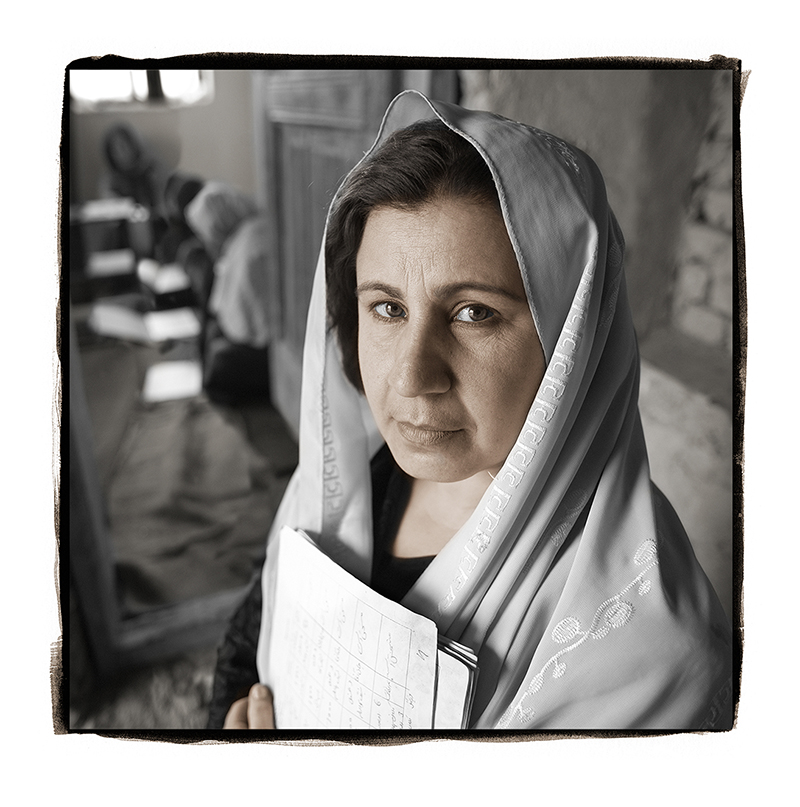
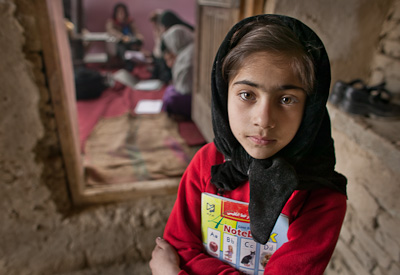
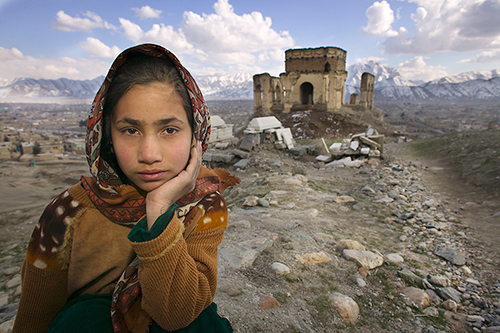
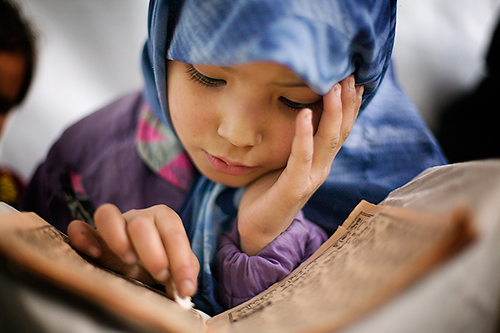
Hadia, Out-of-School Girls Program, Kabul, Afghanistan
Hadia, age 11                   Out-of-School Girls Program, Kabul, Afghanistan

By 2000, UNICEF reported that only 4 to 5% of Afghan children were being educated at the primary school level. Fewer still had access to secondary and university-level education.

According to the World Bank, “Since 2002, more than 6 million students and teachers have returned to school.” 

The organization, Ayni Education International, has certainly had a hand in the increasing education, especially for girls, in Afghanistan.  Featured this week in the Seattle Times, Ayni was founded by Seattle based Julia Bolz.

From Ayni’s website, “Our main project, called “Journey with an Afghan School,” began just months after 9-11 and the Taliban were removed from power in Afghanistan. It is a grassroots project to build and supply schools for Afghan children. 

With funds raised by communities across the country, we have defied all odds by building and supplying 19 new schools and repairing over a dozen others, serving about 25,000 Afghan students. We also have provided wells; distributed text-books, school supplies and athletic equipment; provided teacher trainings; and set up libraries, computer centers and PTAs. Most recently, we set up two teacher training centers, training several hundred teachers.”

As I continue to add to the “Call to Action” portion of a new website to be launched soon (www.stirringthefire.org) I am continually amazed by the extraordinary people like Julia Bolz that are making a difference.  Thanks Julia for your wonderful work!

Posted

In sub-Saharan Africa, 61% of all people living with HIV are women. Young women (15–24 years) are three to six times more likely to be infected than men in the same age group.*

Unfortunately, 800,000 Zambian children have lost one or both parents to AIDS, and others are left to care for themselves because their parents have to work in the fields.**

Severe burns happen frequently because a third of the world still uses open
fires for cooking, heating and/or lighting. Overcrowded living conditions, lack of proper safety measures, loose clothing worn by women and insufficient parental supervision of children are other factors.

Because AIDS takes the lives of so many parents, especially the women who are the main caretakers of children many more children are now suffering burns from open fires.

The story of Mateo represents the typical scenario.  He fell into an open fire while under the care of his slightly older sister.  Actually Mateo was one of the lucky ones, many children go untreated but he received help from Interplast partner Dr. Goran Jovic.

The Forgotten Global Health Crisis from Phil Borges on Vimeo.

I traveled with Dr. Jovic as he flew to remote villages around Zambia in his single engine plane to treat severely burned patients that would otherwise never receive treatment and remain disabled for life. 

Burns comprise half of Interplast surgeries, with 80 percent of them being performed at 12 Interplast Surgical Outreach Centers in nine countries. 

*World Health Organization
**Interplast

Posted

When I read in the book Half the Sky (Kristof/Wudunn, [New York: Knopf, 2009], xx-xxi) that the Joint Chiefs of Staff now consider the education of women and girls important to our military goals in Afghanistan and Pakistan, and consequently to our security here at home, it gave me hope that US military thinking has evolved from the days of ‘Shock and Awe’.

The UN, UNICEF, the World Bank, CARE and other experts on poverty reduction like Jeffrey Sachs and Paul Farmer have indicated that the key to alleviating global poverty and its attendant ills (like fundamentalism and extremism) is by empowering women and girls. Yet today less than 1% of US foreign aid targets programs that empower women and girls. Evidently it hasn’t gone unnoticed that the countries we are having the most trouble with right now are countries that marginalize their females. Hopefully this realization by the Joint Chiefs will prompt some rethinking about the allocation of our foreign aid funds.

kabul1day0109
Humaria,11, sells eggs on the streets of Kabul to help support her family. She has never attended school. Today the literacy rate for girls in Afghanistan is 15% in the urban areas like Kabul and .6% in the rural areas.

Fortunately, the citizen sector (non-profit organizations) are stepping up to fill this need. There are literally thousands of organizations providing micro credit loans and educational opportunities for women and girls or addressing the issues of maternal mortality, violence against women and child trafficking.

The big question most of us are asking is how can we help? In my next blog I would like explore how nonprofit models of giving are evolving to become more personal and transparent.

Posted

rachel3
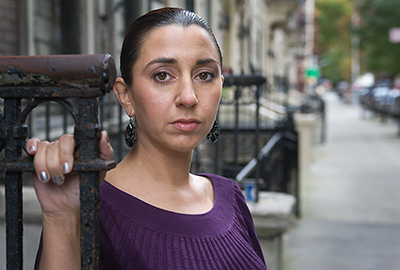
Rachel Lloyd, founder of GEMS, New York City

Exploited and trafficked girls in the United States

According to the Department of Justice, over 100,000 adolescents are involved in prostitution in the United States.  Sgt. Fassett of the Dallas Police dept pointed out an obvious irony of this situation.  “If a 45 year-old man has sex with a 14-year-old girl and no money changes hands, she will probably be sent to a counselor and he will likely get jail time for statutory rape.   However, if the same man leaves money on the table after having sex with her, she will probably be locked up as a prostitute and he will probably just get a fine as a john.”

Last Friday I went to Harlem to interview and photograph a remarkable woman by the name of Rachel Lloyd.  Rachel is the founder of Girls Educational and Mentoring Services (GEMS) in New York City and has dedicated her life to the struggle to end sex trafficking.   Rachel herself a survivor from an alcoholic family in England dropped out of school at 13 and was recruited into the sex industry.  Like so many girls who end up on the streets she was raped and attempted suicide three times.  Eventually, she emigrated to the United States where she vowed not only to change her life but also to help empower girls and young women in need and fight for their rights.  She went back to school, first earning her GED, then a Bachelor’s degree in psychology and finally a Master’s degree in urban anthropology.

For more than ten years, GEMS has been at the forefront of the movement to end the commercial sexual exploitation of children, building a national reputation as the country’s leading resource on the issue. GEMS has trained thousands of service providers and professionals who come in contact with at-risk youth to recognize signs of exploitation and to intervene and assist young women in their healing and recovery. GEMS’ success is due in large part to Rachel’s compassion for and understanding of young victims, her ability to work with political and community leaders, and her desire to change perceptions of commercially sexually exploited victims.

Rachel told me that historically law enforcement in our country has punished the victims of the sex industry—the vulnerable and exploited adolescent girls that are coerced and trafficked into the trade.  She said that labeling and jailing them as ‘teen prostitutes’ instead of what they are–exploited and trafficked children– while ignoring the 30 to 40 year old men that sell and buy these girls has been a crime in itself.

I took Rachel’s  photograph on the street outside the GEMS small office and then conducted the following interview in her tiny cubicle while her energetic staff of young women went about their important and  revolutionary work.

Rachel’s interview really opened my eyes to the problem of sex trafficking—especially of children– here in the U.S.  Take a listen!

Posted

Akhi

Women Empowered has been my primary focus project for sometime now.  I am currently expanding the exhibition to include multimedia profiles of a number of the women.  The first that I have completed is the story of Akhi, who at the age of 13, was sold as a sex worker.  She has since accomplished the near-impossible task of gaining support from religious, political and social groups to create an organization to finally give sex workers’ basic human rights.

Posted

There are many who believe that the greatest handicap to development in Muslim Middle Eastern societies is the status and roles they give to women.  Nowhere has this been more evident than in one of the poorest and dysfunctional countries in the world—Afghanistan.   During the reign of the Taliban essentially all women working outside the home were fired; 7o% of the school teachers, 50% of the civil servants and 40% of the doctors were women.   You can imagine what eliminating women from the labor pool did to the function of Afghan society.  To make matters worse many of the women were widows because of the lengthy wars in their country.   These women were left with no way to support their families. 

FahimaIn 2005 I met Fahima, a teacher since 1985.  She was one of the thousands of professional women who lost their jobs when the Taliban came to power in 1996.  In defiance of the Taliban and at great risk to herself, Fahima opened a clandestine school for young girls.  At one point 130 girls were coming to her home each week to study math, science, and the local language, Pushto.  When the girls were asked why they were going to Fahima’s house they said she was their aunt.  Although harassed by the religious police and threatened with beatings and worse, Fahima continued operating her school for girls until the fall of the Taliban in 2001.
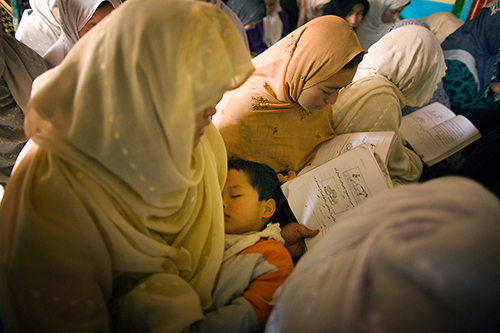
Fahima now helps girls catch up with the education that they missed out on during the reign of the Taliban. 

school10027

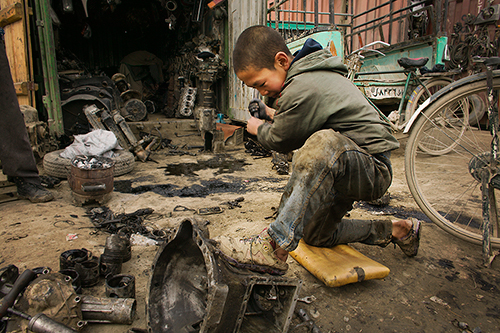
Unfortunately, it is not news, that even with the fall of the Taliban Afghans still face severe challenges.  Most children work to help their family survive and few are able to attend school.  

1Street0228

kabul1day0109
Humaria sells eggs as a street vendor to help her family survive. As with many families in Afghanistan, years of war have left them very poor. Only half of all Afghan children ages 7 to 13 attend school and typically boys are chosen over girls. 

“From acid attacks, murder, torching of schools and sexual assault, violence against female students is dashing the dreams of thousands of Afghan girls and women who are thirsty for an education that may help rejuvenate the fractured economy and society of their war-torn country.”  From Reuters, Jan. 2009. 

Dexter Filkins, a reporter for The New York Times, took a stand to help improve conditions for education in Afghanistan.  I highly recommend you read his wonderful story.  

Salman_e_Fars0020
Nafisa was thrilled when she learned she was chosen to attend Salman-e-Fars, a new school recently opened for young girls in Kabul.  Girls now make up thirty-four percent of the student population in Afghanistan- a dramatic increase since the Taliban rule, when it was essentially zero.

Posted

Because most of my work is now done in very remote areas without the help of a trained assistant, I have learned how to simplify my on-location lighting substantially. Now I choose lighting equipment based on its reliability, simplicity and weight.

When I first started making portraits of indigenous and tribal people in the field, I wanted to re-create the same lighting I was accustomed to using in the studio. So it was natural for me to think of a softbox as the best solution to get nice soft directional light. But instead of a light stand, I started using a tripod to accommodate the uneven terrain in the field. I would hang my Lumedyne power pack on the tripod to stabilize it in the wind. Then, it usually took me five to ten minutes just to set up the tripod and softbox. Once I started shooting, I found it very awkward to change the direction of the light while I was working with my subject.

ti1

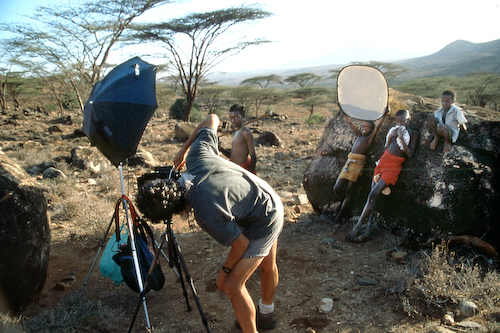
On one trip it finally dawned on me that I didn’t need to use a softbox since I didn’t have the problem of extraneous light bouncing back at me off studio walls. I could use an umbrella which was much easier to assemble. I also realized that I could almost always ask one of the many eager kids that would gather around to hold my light stand when the wind was blowing. So why did I need a stand at all?

kenyaworking2
One of the wonderful things about photographing in the developing world is that the kids love to be around new technology and hence serve as wonderful assistants.

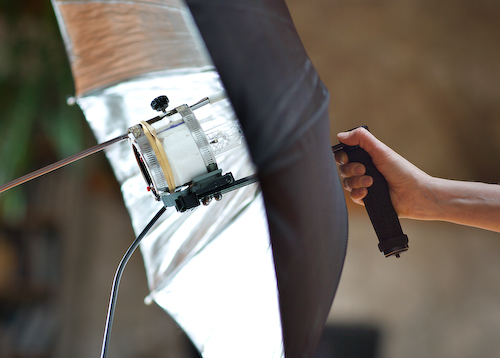
After I returned home, I modified a strobe bracket with some quick-release brackets and came up with a portable system that could be assembled in the field in less than a minute. This also allowed me to check my Polaroids and then change the direction and distance of the light in seconds.

Lumedyne

Since then, I have simplified the whole process even further. For one thing, shooting digitally with my Canon 1ds Mark III allows me to check my strobe-to-ambient-light ratio on the LED of the camera. I no longer need Polaroids.

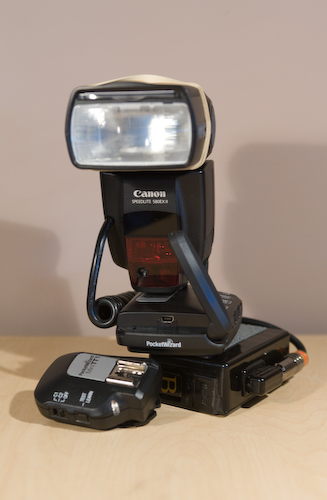
I used to use the ST-E2 Speedlight infrared sender, but it was unreliable in bright light.  Now, to simplify matters even more, I use Pocket Wizard’s Flex TT5 and MiniTT1 to wirelessly fire my off camera flash (Canon 580EZ). I power the strobe with Underdog rechargeable batteries instead of AA’s (Underdog has unfortunately gone out of business). The battery pack is about the size of a pack of cigarettes and the universal charger is even smaller.

_W6F2025

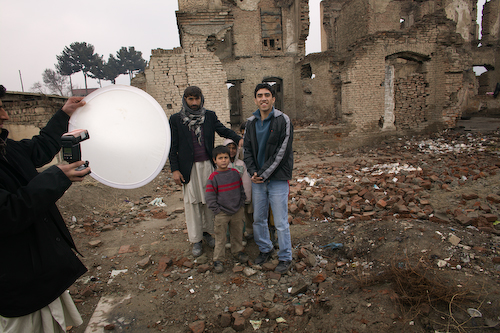
I now soften the light by having my assistant hold a twenty inch translucent disc about one foot in front of the strobe. I shoot one frame then check the LED. If the strobe light looks too bright or too dark I can quickly make adjustments with the flash exposure compensation dial on my camera body. It is so easy!

550EZ_TTL

Posted

I’m often asked how I gain access and go about photographing people in the developing world. First of all your mental attitude as you approach someone to take their photo is critical to your success no matter if the person you approach is from a remote tribe in Irian Jaya or someone on the streets of New York. If you are approaching someone with the intent of taking something (i.e. a photo) you are immediately at a disadvantage.  You are now up against the problem of having to convince them to give you something. 

ir2

When I approach someone I am thinking and believe that I am about to give them something. For one I’m going to complement them by letting them know that I believe they are unique and interesting to me. I also know that I am going to give them a unique experience. It isn’t every day that someone comes up to you and asks if they can photograph you. You don’t even have to be able to speak to the person. If you are thinking it they will be able to read it in your body language. They can read if you hope to make their day or if you are just trying to get something out of them. 

mongolia

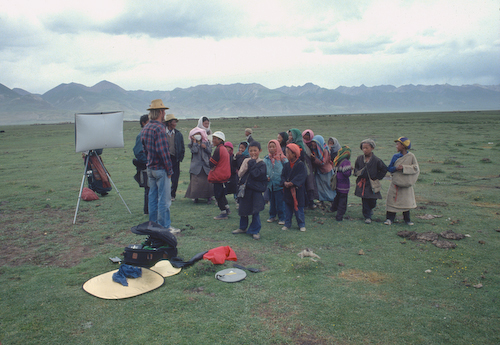
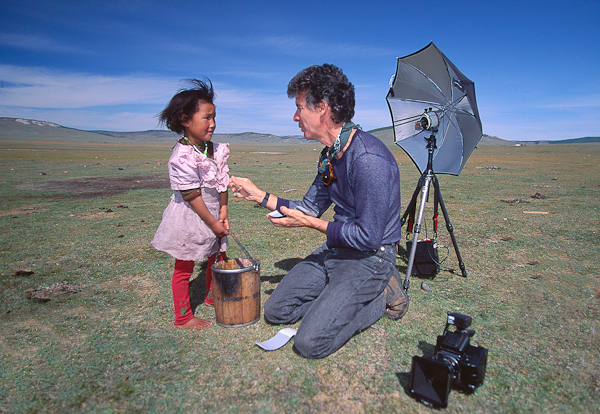
When I enter a tribe or village for the first time I almost always start by interacting with the kids. Kids are the most open and curious about new experiences. I take out my photographic equipment and begin taking photos of them and then giving them photos of themselves.  It is my little magic show.  Many times these kids ask to become my production crew. Before digital cameras I shot Polaroids, today I show them the LCD on the back of my camera and also carry a small battery operated HP digital printer so I can hand out prints. During my stay in the village these prints and Polaroid’s make it to their parent’s huts and soon I’m being invited into their homes and being asked to take photos of everyone. At this point the problem becomes how to take photos of everyone. I only carry a finite amount of Polaroids and ink cartridges! I find myself doing many group photos.

 ti4

Even though I first approach people without an interpreter so they can get a sense of me through my body language, I always have someone available that can serve as a translator. I want to be able to tell them what I intend to do with the photos. In my case for exhibitions and books relating to an issue that their group is dealing with (human rights violations, poverty or environmental degradation).

I see many tourists taking photos of people in markets and villages without any meaningful interaction with the people they are photographing and many times getting a negative reaction. Just think how you would like it if someone came into your backyard and started taking pictures of you and your family without making a connection with you. 

Photography can be a great ice breaker that will allow you to have a wonderful cross cultural experience.

Posted

In 2004, I began documenting the work of organizations whose focus is the empowerment of women and girls. After visiting dozens of projects and meeting hundreds of participants and staff around the world, I have also come to believe that the most efficient way to alleviate poverty and reduce population pressures in the developing world is to empower women and girls through education, economic opportunity and open discussions about rights.

Here are a few of the extraordinary women I have had the honor to meet. Women who have broken through a cycle of repression or cultural tradition that limited their well-being and that of their communities— women heroes, remote and mostly unknown, on the leading edge of a global movement toward social and economic justice for women and girls.

Dr. Chandini Perera
Plastic Surgeon

Chandini

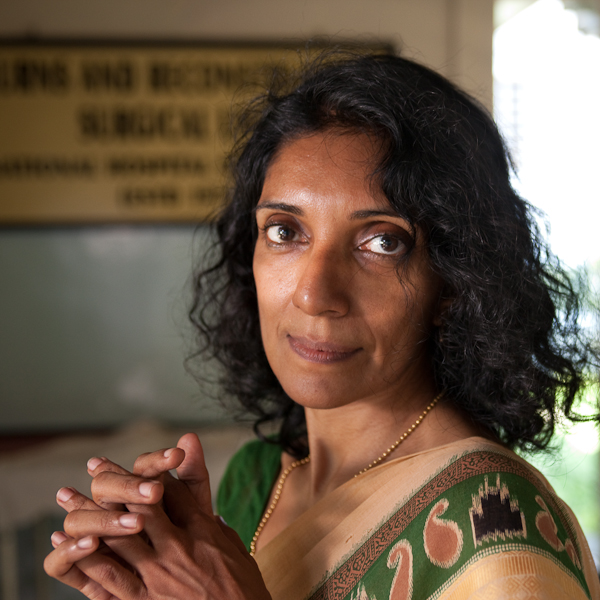
I met Chandini in Sri Lanka while doing a film for the nonprofit organization Interplast. Interplast provides support for the victims of severe burns around the world. Chandini created almost from scratch one the most successful burn centers in Sri Lanka.

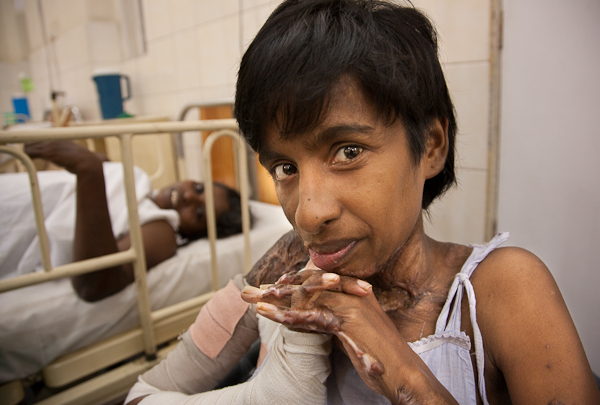
When Chandini first started working with burns at the main hospital in Sri Lanka’s capital, she was surprised to find that the majority of her severe burn patients were women. They claimed the burns were accidental. However, as she began to treat these women she could not help but notice that the burns followed a specific pattern.  The burns were typically on the front of the upper body, arms, neck and face. As she slowly gained the confidence of these women they confided to her that they had set fire to themselves. Realizing that these women needed more than just the physical treatment for their burns, she formed a team that included a psychologist, a rehabilitation specialist, and several nurse practitioners.

Chandini told me that 70% of her severe burn patients are the result of self immolation. I didn’t understand it. Why would someone set themselves on fire? It had to be the most painful way to die.

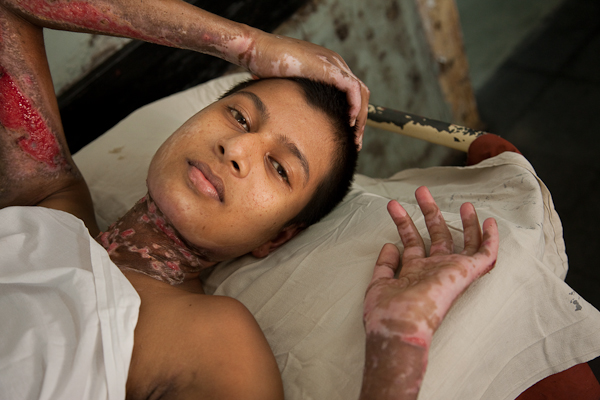
Self Emulation Victim
Self Immolation Patient

As I documented Chandini’s work and met some of these women I began to realize that this terrible problem had its roots in women’s social and economic injustices. Self immolation not only happens frequently in Sri Lanka and India but is prevalent in Bangladesh, Vietnam, Pakistan and Afghanistan.

Kumari, Colombo, Sri Lanka

Here is a multimedia piece about Chandini titled “Postcards from Heaven”.  She is currently working tirelessly to raise awareness and end domestic violence in Sri Lanka.