Posted

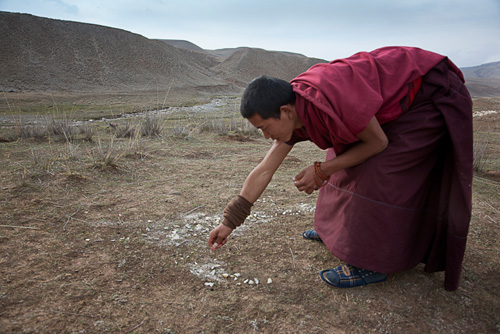
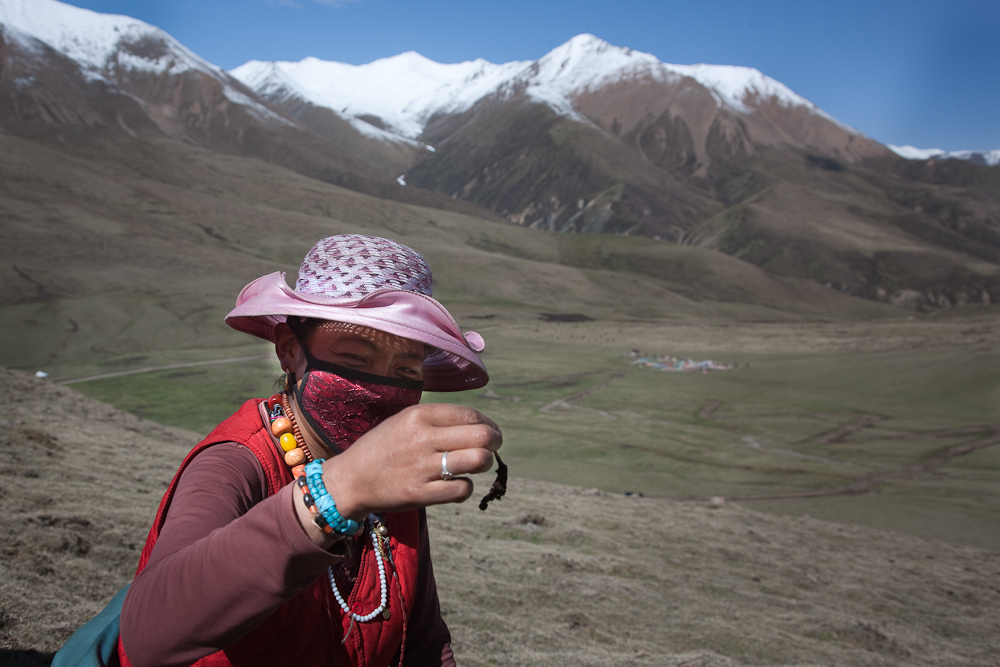
During the month of May an obscure fungus becomes the major focus of people living on the Tibetan Plateau.  The Cordyceps sinensis fungus is known locally as Yartsa Gunbu or Caterpillar Fungus.  The fungus devours and eventually mummifies its host, the ghost moth caterpillar, from inside out during the caterpillar’s hibernation on the mountain grasslands between 10,000 and 16,000 feet.  The caterpillar dies just below the ground and then the dark brown/black mushroom emerges through the soil from the head of the body.

The growing popularity and belief, especially among the Han Chinese, that the fungus is an aphrodisiac and promotes longevity has fueled a modern day gold rush on the Tibetan Plateau.  The fungus came to the world’s attention after some Chinese athletes at the National Games in Beijing extolled its virtues. 
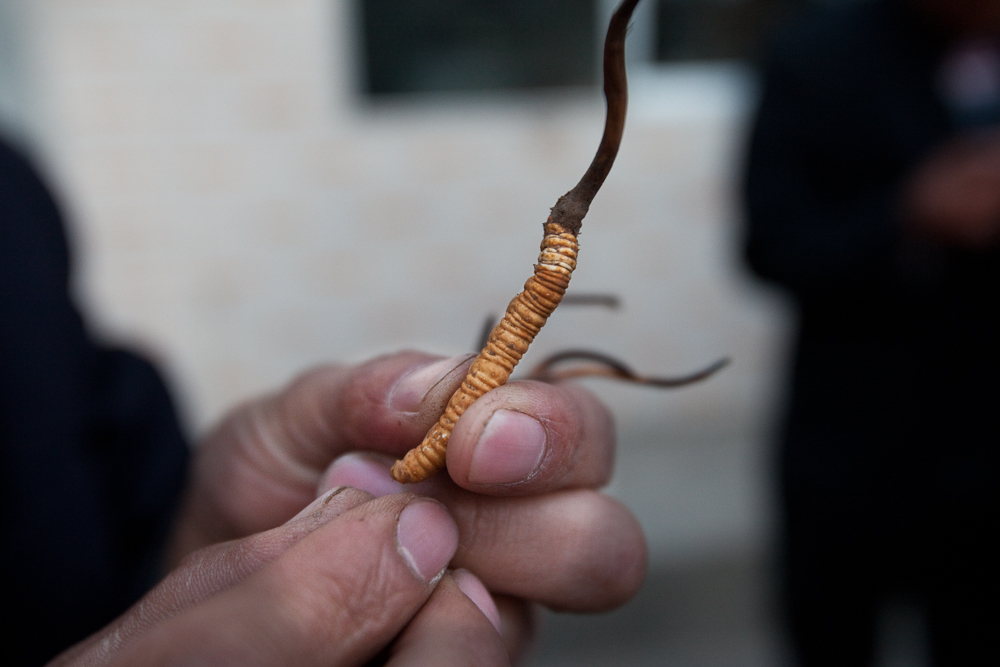
It is estimated that today over 40% of the income of rural Tibetans come from the Caterpillar Fungus.  I was told that one Kilo of the fungus is worth $10,000 and that the children of Nomads can each collect as much as a Kilo per month.  In late 2007 the value of the best-quality Yartsa GünbuDbyar rtswa dgun ’bu in Lhasa (Lasa) traded for around CN ¥80,000 (nearly US $12,000) per pound (JIATS, Danial Winkler).  Since the Nomads are most familiar with the areas where the fungus grows they have become the greatest beneficiaries.   
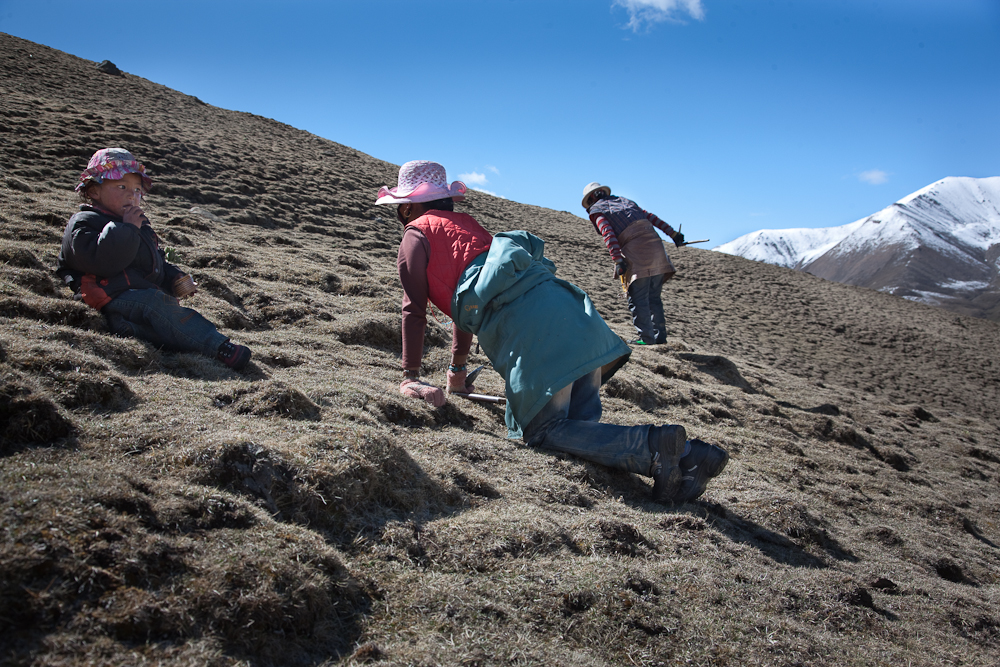
I would walk into empty monasteries because the Monks were either hunting Yartsa Gunbu or home tending to the animals so their family could be out hunting.  You can imagine what this does to school enrollment of Nomadic children during the month of May.  Almost everyone I met –Monks, Nomads, Hui Muslims, and Urban Tibetans were involved in harvesting or trading the fungus. 
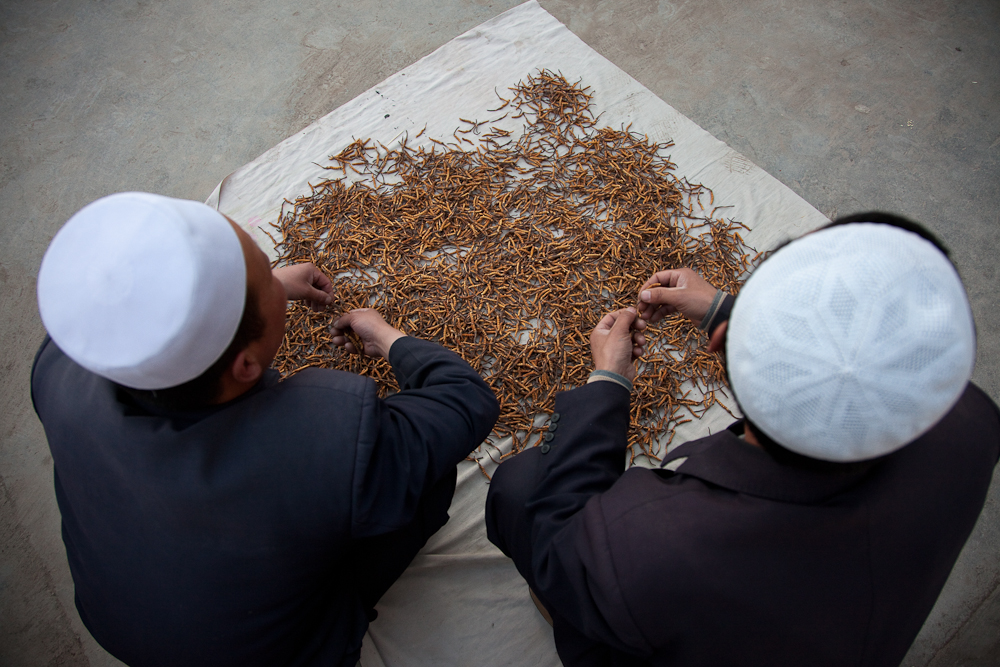
According to field mycologist, Daniel Winkler, the value of Yartsa Gunba has increased by 900% between 2007 and mid 2008.  Unfortunately, arguments over grazing rights has lead to community disputes.  The violence has caused injuries and even a few deaths.  There were many occasions during my travels when we ran into road blocks and interrogation by officials who let us continue our journey after they were assured that we were not collecting the valuable fungi.
Posted

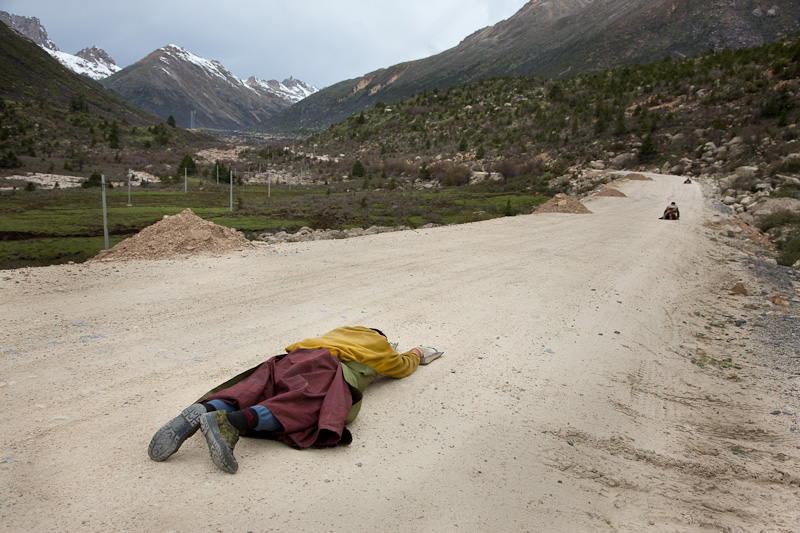
Pilgrims about to cross the 15,000 foot Chola Pass on their 2500 kilometer pilgrimage to Lhasa, prostrating the entire way. The devotion of the Tibetan people is unbelievable.

As I travel through the Eastern Tibetan Plateau, one thing has become very apparent. Tibetan Buddhism is enjoying a strong resurgence.  Almost every Monastery I visit is building a new temple.  


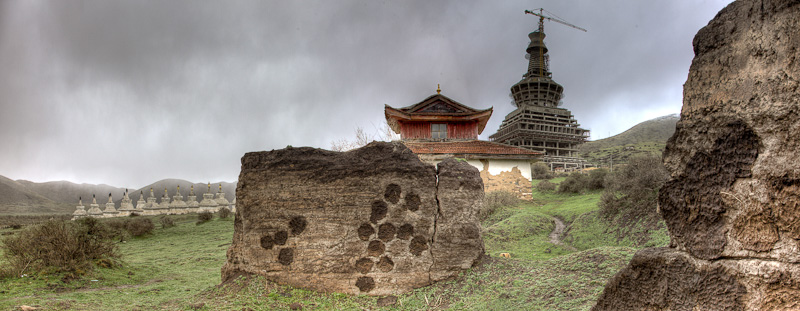
World’s largest stupa – 8 stories high near the remote Miwa Monastery on the Tibetan Plateau.

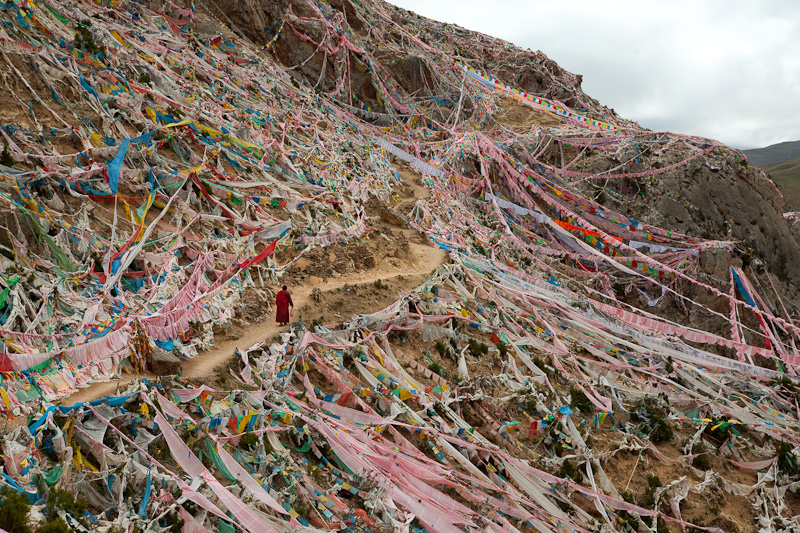
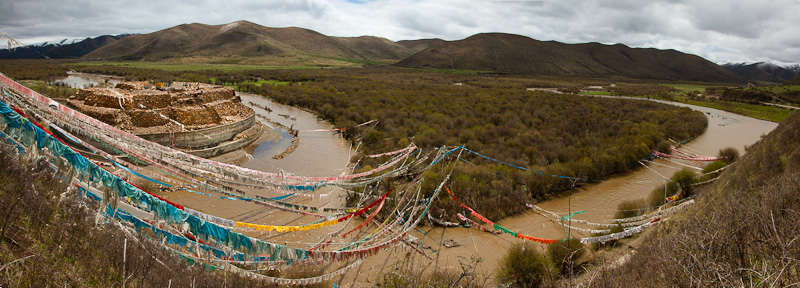
Evidently the funds for all this building is coming from the local Tibetan communities along with some support from Western organizations.  The omnipresent prayer flags cover entire hillsides and mountain tops.  

 Monk walking the kora at the Temple of Princess Wencheng, near Yushu.

My guide said that this proliferation of prayer flags has just happened in the last 5 years.  I just purchased a few flags and can’t imagine the resources that have gone into covering these hillsides.  I am reminded of the work of the French artist Christo.

World’s largest Mani wall in Hongyan, Tibet. A Mani wall is composed of millions of individual rocks carved with the Tibetan mantra, Om Mani Padme Hum.

Posted

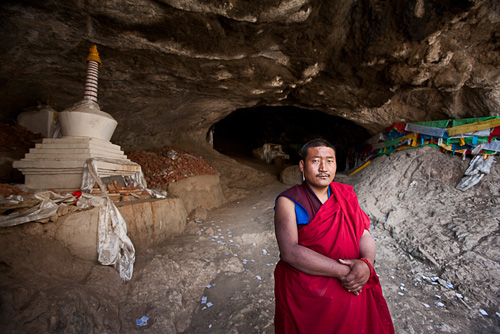
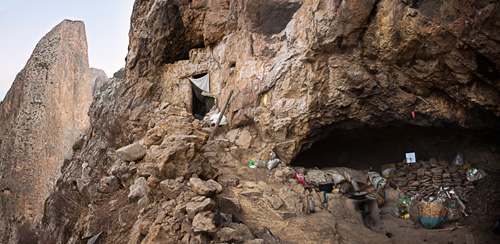
We met Choqhua, a monk from the small and remote Trakkar Monastery near Labrang in Gansu Province.  We spent 3 days staying with him in his little cottage.  He took us to the tiny remote village where he grew up and to a nearby cave where the 9th Panchen Lama was said to have meditated. 

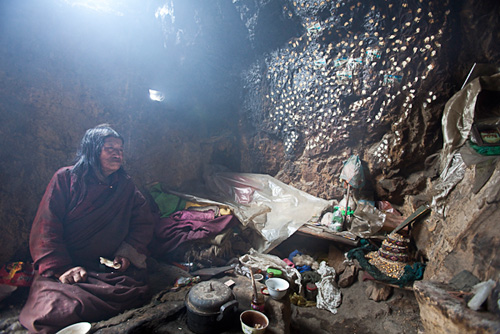
However, the highlight of our time with him was a visit to a ninety-year-old Ani (a nun named Sadia Tsomo) who went to a cave in a mountain side to meditate when she was twelve.  Choqhua and other members of his monastery and the local villagers have provided her with food water and firewood over the years.  Choqhua told us they consider her to be the manifestation of the ‘great mother’ protective deity Green Tara.  He also told us she had never seen a foreigner before.


The thoughts of meeting this woman who had spent 78 years meditating in a cave inspired me to climb the mountain to her 13,000 ft retreat.  Choqhua said that she does come down from her cave once a year to visit the monastery, but that she had never seen a foreigner


As we approached the entrance to her cave Choqhua had us stay back as he went in to meet her.  Twenty minutes later he came out to let us know that she was too frightened to see a foreigner.  I gave my camera to my guide Trashi Dhondrup who was able to go in and meet her and take a few photos.  Tashi is from Yushu where the April earthquake hit and destroyed the town and the guest house he was building.  He asked her to pray for the friends and relatives that he had lost in that tragedy.

Posted

News sent from Phil while working on a second book in Tibet:

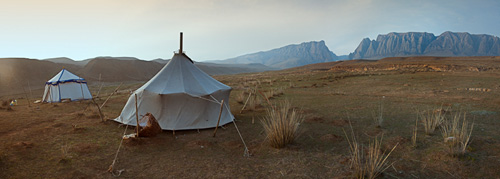
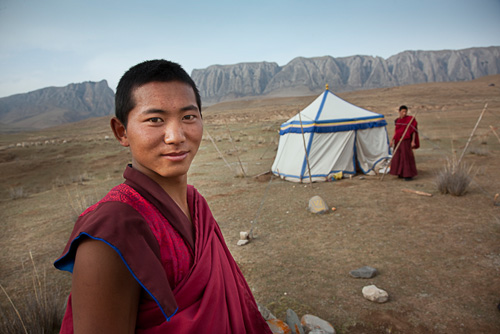
I’m in Gansu Province on the Eastern Tibetan Plateau adding to my collection of stories of people who live on the plateau.  I’m traveling with Stevan from North Carolina and Inigo who is currently living in Singapore — Both are photographers that I met in my workshops.  Vincent, our Tibetan guide pointed out this group of monks camping out in the middle of nowhere.  Monks camping!?!  There were six monks that were on a 129 day pilgrimage moving their campsite every two days.  They would retire to their tent and chant for two hours praying for a good growing season and health for the livestock of farmers and nomads in the area.   They did this six times a day!

We watched as they joked with each other, carved mani stones and fed the ants.

Posted

“Women make change, but not in circumstances of their own choosing. They have to negotiate. They have to subvert tradition that once silenced them in order to give voice to new aspirations. . . We can use our tradition to navigate change.”

Ted Talk by Kavita N. Ramdas, president and CEO of the Global Fund for Women

Kavita tells the stories of three amazing women that have taken part in the global movement to empower women and girls by embracing and integrating their tradition and culture into their efforts. 

Global Fund for Women

The Global Fund for Women is a nonprofit grantmaking foundation that advances women’s human rights worldwide. We are a network of women and men who believe that ensuring women’s full equality and participation in society is one of the most effective ways to build a just, peaceful and sustainable world. We raise funds from a variety of sources and make grants to women-led organizations that promote the economic security, health, safety, education and leadership of women and girls.

Posted

When One HEART decided to begin its program to address maternal mortality with the indigenous Tarahumara  in Northern Mexico they contracted with Alisun Chopel to do a feasibility study for the program.  Alisun was a student working on her Masters Degree in Public Health at UC Berkeley.  She applied for an internship with One HEART got a scholarship to cover her expenses and headed for Mexico.  Alisun spent 2 months living in the Sierra Tarahumara meeting with the local health workers and Parteras (traditional birth attendants) to see what their needs were and how One HEART’s methodology could fit into the Tarahumara cultural context.  In doing so she not only gained an invaluable life experience, but fulfilled the requirements for her master’s thesis.


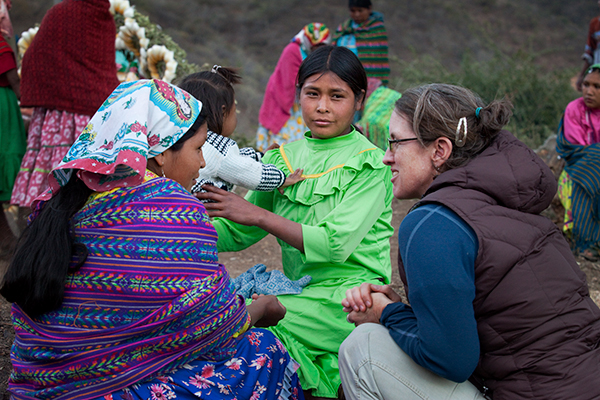
Suzy consulting with Tarahumara mothers

Alisun’s findings prepared the way for Suzy Messer another university student who is currently pursuing her Master’s in Public Health with a concentration in Maternal  Health through Boston University’s School of Public Health.  Suzy is now the Field Coordinator for the rollout of One Heart’s pilot program in Chihhuahua, Mexico and is using her work there to complete the requirements for her master’s in Public Health.


Suzy visiting villages in the Tarahumara

As I’ve been speaking around the country on women’s issues for the last few years, many university students have come up to me and asked how they could get involved.  Like most students they didn’t have money to donate but they wanted to do something.  One of the most exciting parts of the Stirring the Fire website is the call to action that offers a myriad of ways — like working with organizations like One HEART — to support women and girls around the world.

When you get a chance check out Take Action on our website with its searchable database of organizations.

Posted

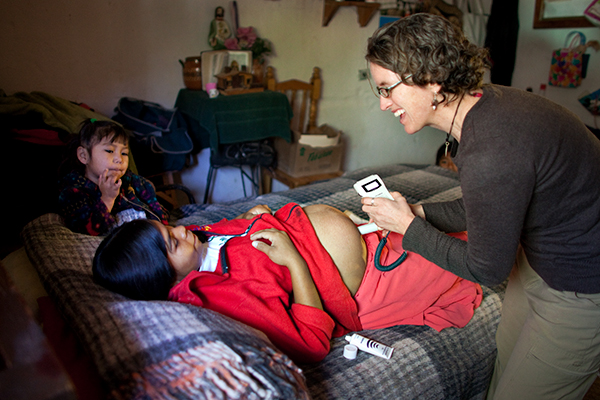
For cross-cultural global health programs it’s critical to ensure that there is compatibility between the values of the program and the recipient culture.  Since most Tarahumara women live several hours or days away from the nearest clinic or hospital they suffer one of the highest rates of maternal mortality in North America.  Of course it would be ideal if the women were giving birth in clinics or hospitals but women hesitate to make the long and difficult trip–especially if labor has started.  They typically end up having their babies alone or with an untrained birth attendant.  Part of One HEART’s plan is to conduct a maternal health education program for the local Parteras (traditional birth attendants) and give them a few basic items like sterile blades to cut the umbilical cord.


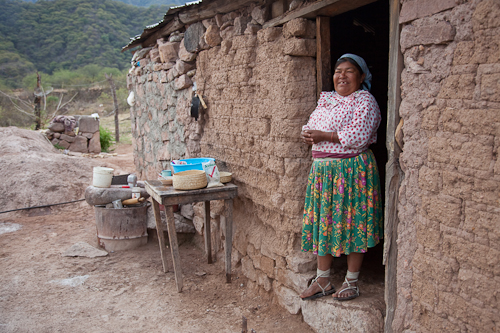
Teresa, local Partera

Ninety percent of the women who die in childbirth do so because of postpartum hemorrhage.  Administering drugs like Oxytocin to women who are having postpartum bleeding causes the uterus to contract and very effectively stops the bleeding.  Unfortunately, Oxytocin has to be kept refrigerated.  Another very effective drug for post partum hemorrhage, Misoprostol, does not need refrigeration and is very inexpensive—therefore an ideal drug for the Parteras to have on hand.  Unfortunately, because ‘Miso’ can also be used to induce an abortion, it has not been allowed to be used in the heavily Catholic Tarahumara Sierra. 

Arlene Samen the executive director of One HEART traveled to Mexico City to see if she could get the ban on ‘Miso’ lifted in the Tarahumara Sierra if proper precautions against misuse were taken.  The Mexican authorities who have been extremely welcoming to One HEART are taking Arlene’s request into consideration.  If approved it will be a huge victory for the Tarahumara women and their families.

Posted

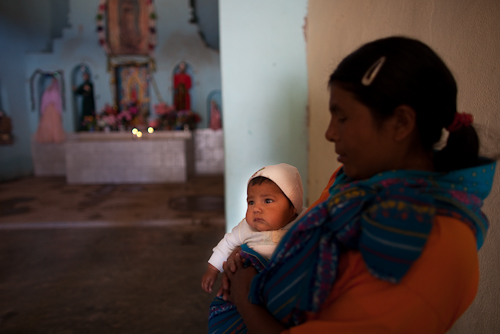
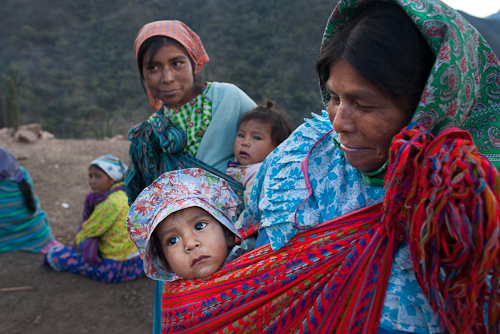
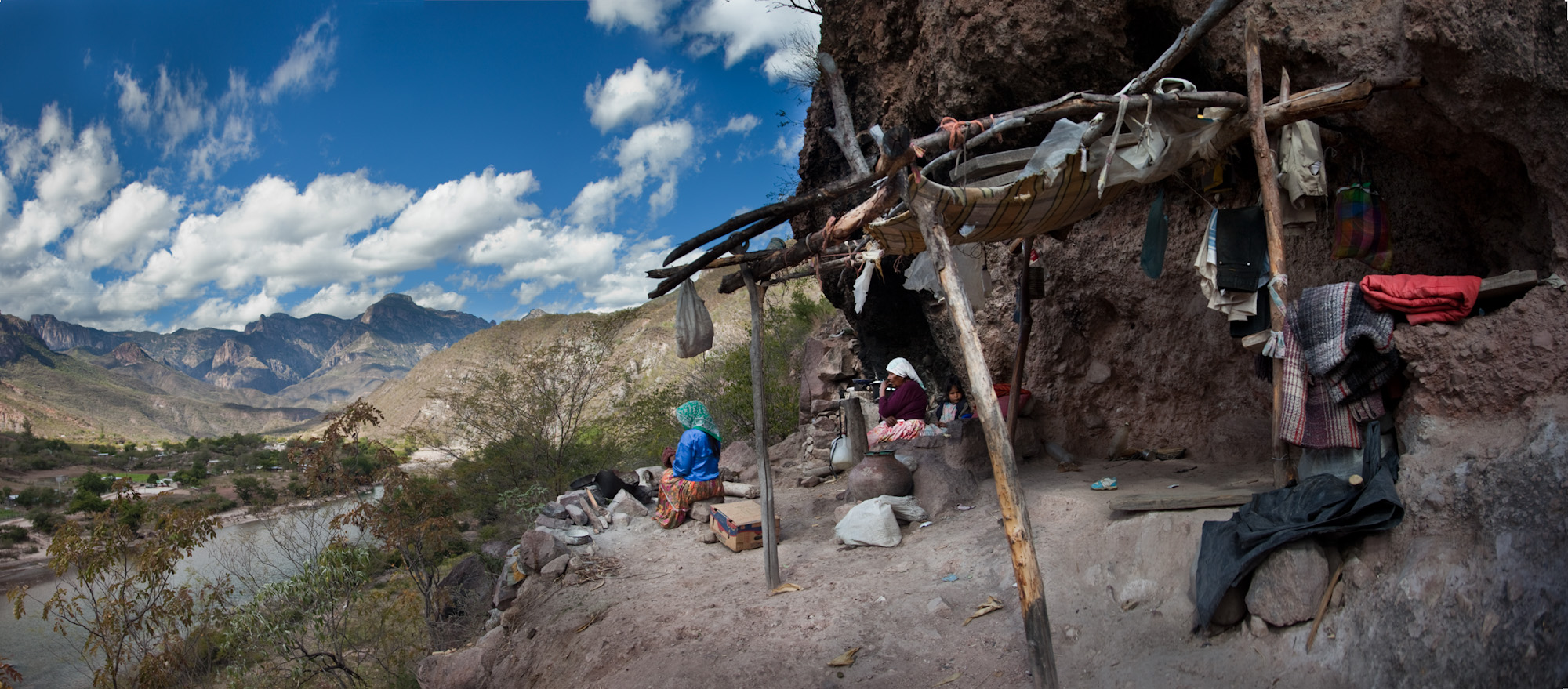
I recently returned from the Copper Canyon located in the Sierra Tarahumara in Northern Mexico where I was documenting the work of the non-profit organization One HEART as they address the high rate of infant and maternal mortality among the indigenous Tarahumara.  There are about 70,000 Tarahumara Indians—or Rarámuri—scattered throughout the Sierra living in natural shelters such as caves or cliff overhangs, as well as small cabins of wood or stone. 

The Rarámuri are best known for their tradition of long distance running up and down the steep canyon trails.  Some of their races, which they run in sandals or barefoot, last for days.  In fact the Rarámuri are hosting their annual Ultra Marathon on March 7th.  I was told that they hunt deer by chasing the animal until it drops from exhaustion.

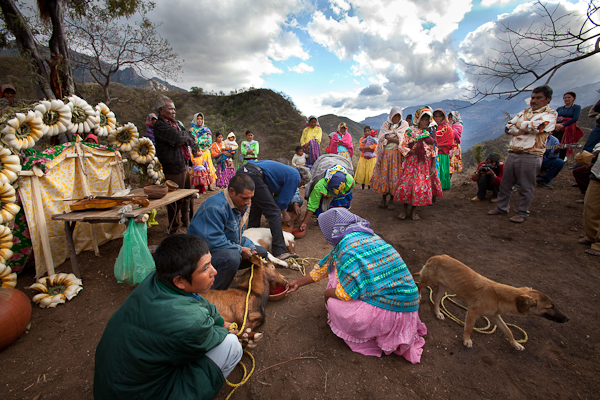
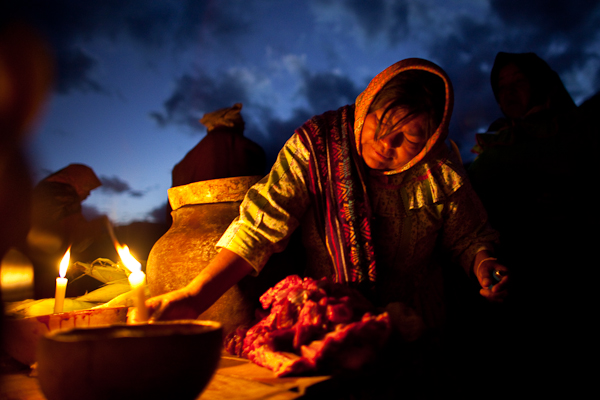
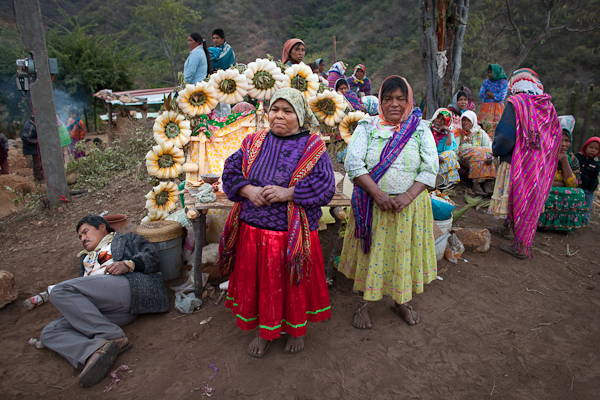
The One HEART team was welcomed by the Rarámuri with one of their special ritual Yumaré fiestas which lasted all night.  Two goats were sacrificed and the women brought ceramic jars filled with tesguino (corn-based beer) that is consumed in many Rarámuri rituals.


Around 4 am I managed to get an hour of sleep before it began to get light.  Although the women did drink a little it was the men who really let their hair down. 


The music and dancing went on all night and as dawn broke it was mainly the women who were left standing. 

I have found that preconceived story lines almost always take an unexpected turn and this one certainly has.  If you have seen previous post on One HEART you are aware that I started working with them in Tibet.  This documentary which I originally thought would portray a successful approach to maternal mortality on the Tibetan Plateau now looks like it will be about the political and cultural hurdles one faces when trying to address issues like maternal and infant mortality in the developing world.  The Mexican Government is very receptive to One HEART’s work, however, the drug wars in Northern Mexico and cultural issues with the Rarámuri may pose special problems as One HEART tries to establish its program.  For cross-cultural global health programs it’s critical to ensure that there is compatibility between the values of the program and the recipient culture.  I hope to document the process One HEART goes through to become aware of and bridge the Rarámuri cultural beliefs and values with our western medical traditions.  I will continue to post more about the One HEART story as it unfolds.

Posted

As I have mentioned the digital revolution in photography has made my work easier in many ways.  One of the greatest benefits is being able to capture images in low light.  With the release of the new cameras like the Nikon D3s and the Canon EOS-1D Mark IV this is just getting better.

However, the media revolution brought about by the internet is nudging all of us still photographers toward multimedia.  Now the space in my backpack that opened up because of the lighting equipment I have been able to get rid of has been more than replaced by audio and video equipment.

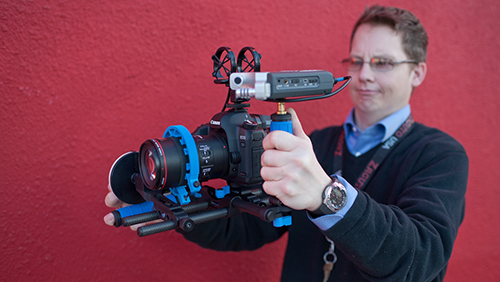
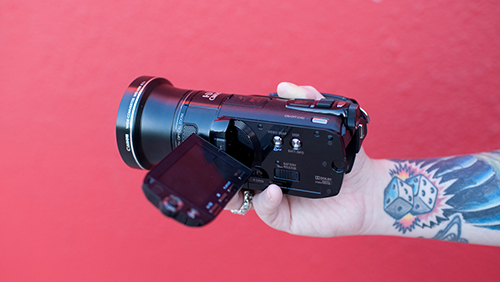
On the trip to the Tarahamara in Mexico I brought my Mark II 5D and the Sony PNW-EX1 to shoot video.  Betsy Hershey who is collaborating with me on the project brought her Canon Vixia HF S11 camcorder.  After spending time with all three cameras I’ve come to this conclusion.  The Mark II 5D is not ergonomically built to shoot video.  Even with the Z-Finder it is hard to focus on the move.  The add-ons that you need to purchase to make it somewhat ergonomically efficient make the 5D cost and weigh more than the Sony EX1.  The one advantage it has is being able to use all the Canon lenses and obtain a short depth of field.  From now on I’ll use the 5D for selected shots and usually on a tripod when I need to isolate my subject with a shallow depth of field.


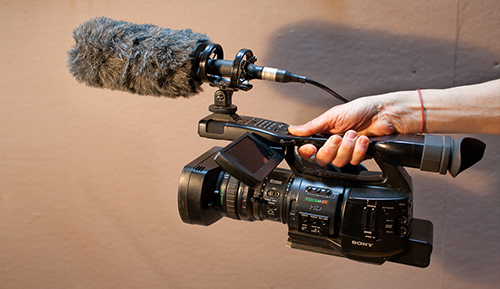
Sony PNW-EX1


Mark II 5D with all the add-ons

The other thing I learned is that the HF S11 does a remarkable job for a consumer grade camera and has many advantages.  There were many times that Betsy was getting the shot while I was still getting my EX1 out of the pack and getting it fired up.  Also, the palm sized HFS11 camera is so unobtrusive!!  This was important in the area we working where there have been many drug related killings and journalists are not especially liked.


Canon Vixia HF S11

Here is some edited footage from the fiesta that alternately cuts between the EX1 and the HF S11.  I see a little less crispness in the image but all in all it isn’t bad!!  Can you see much difference? 

It was just 2 years ago the Panasonic DVX 100 mini DV standard definition was the standard for documentary film makers.  The 1920 x 1080 file from the tiny HF S11 is also a big improvement.

When it comes to catching an intimate moment and getting the shot I don’t mind a slight loss in dynamic range. I’m going to look at the next iteration of the HF S11 (HF S21) which will evidently have a touch and track sensitive LED screen that will allow you to focus by touching the screen on the area you want to focus.

Posted

In my last blog I talked about the equipment I am using for multimedia.  Sound is such a critical part of multimedia production that I would like to elaborate on the sound equipment I use.

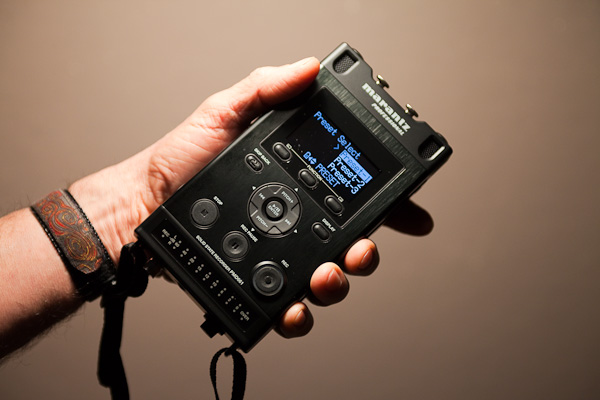
In multimedia you can get away with mediocre images much easier than poor sound.  To get good sound you need to go to an external DAT recorder like the Marantz 661 ($600) or the popular Zoom H4N ($350).   Both have internal mics but to get good sound you need to get some good external mics.   I use the Sennheiser MKH 416 or a wireless lavalier for interviews and the Audio Technica 825 stereo mic for ambient sounds. 

The Automatic Gain Control on the 5D Mark II makes it impossible to record a decent sound track.  When recording sound you want your input volume control to be at a steady level.  The AGC raises the volume setting any time there is a period of silence resulting in weird volume fluctuations through out the recording.  Unfortunately this is not a setting that can be turned off.  If you want to get away from carrying a DAT recorder and the extra hassle of syncing sound in post production Beach Tek has a solution to get around the AGC, but it still does not deliver the sound quality of the Marantz 661 (24bit/ 96kHz).  I decided to beef up the 661 a little further by getting it through Doug Oade who replaces the stock 661 mic pre amps for an extra $160 to increase the signal to noise ratio.  His site is a good source for info on field recording.

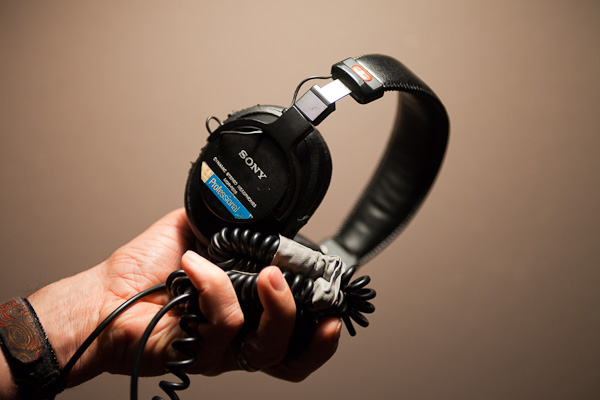
And finally it is necessary to listen to your sound throughout your entire recording.  A good pair of headphones is a must.   The industry standard is the Sony MDR 7506 ($100).  You wouldn’t take a picture without looking through the view finder, so why would you record sound without monitoring it. 

I recently watched Sound for Film and Television, which I recommend for a good and entertaining tutorial.  If you have any resources you recommend please share!