Posted

I have 3 cameras that I use to shoot video for my social documentary work in the developing world. My main camera is a Sony EX1, however, since I’m carrying a Canon Mark II 5D I often use it as a second camera in my interviews. Also when I want a short depth of field or to use special lenses I use the 5D. I also carry the small Panasonic TM 700 when I want to be more inconspicuous, like shooting in Tibet.

Sony EX1

For those of you who use any of these cameras and want to combine and sync the footage you may find the following useful.

Each camera produces files in it’s own proprietary format. The problem arises when I try to bring these different formats into Final Cut Pro 7. Sony’s XD Cam; Panasonic’s MTS files; and the 5D format are best converted to ProRes 422 to be edited in FCP. I just spent 3 days online trying to find the easiest way to convert the files to bring into FCP. Finally out of frustration I turned to an editor friend, Ryan Horner. His workflow is to bring everything in via the Log and Transfer window, however, before you do you need to get the proper plugins. You can find the following plugins below:

For the 5D–Canon EOS movie plugin for Final Cut Pro –
1.  Go to this site
2.  Select your computer OS (Mac) from the drop down menu.
3.  Choose Mac OSX not Mac OSX with a version number on it.
4.  Choose 3rd one down called –  ce1120x.dmg.zip

5D Mark II

For the Sony EX1–Sony XD Cam plug in for Final Cut pro (Use FireFox instead of Safari)

1. Download the plugin here
2. Move the zip file to your desktop.
3. Double click it and follow the steps.

The Panasonic TM 700 doesn’t need a plugin, but does require transcoding software.

Panasonic TM700

For the best quality I shoot the Panasonic TM 700 at 1080/ 60p. Unfortunately FCP 7 does not handle 1080/60p. The AVCHD files must first be converted to Pro Res 422. The best transcoding software I have found for this job is Clip Wrap. Once transcoded you can bring in the files through the Log and Transfer window.

I hope this helps.

Posted

The movement for women’s and girls’ empowerment requires commitment from all of us, including men.  Men’s participation in this movement is increasing around the world creating solid and sustainable efforts toward gender equality.

Men are also powerful allies in the movement.  Take for instance former President Jimmy Carter, founder with wife Rosalynn, of The Carter Center.  The Carter Center’s overarching goal is to advance universal human rights and alleviate human suffering.  Throughout its work, the Center has encountered the reality that women are majorly second class citizens.  Carter himself acknowledges that world religions play a significant role is this.


Former President Jimmy Carter with wife Rosalynn
Credit: Emily Staub/The Carter Center – Nasarawa North, Nigeria

In 2009 Carter gave a compelling speech to the Parliament of the World’s Religions, revealing that the status of women today is in part sustained by world religions’ beliefs in the subordination of women.  He himself is a life-long Christian and staunch advocate for women’s right to equal treatment.  He effectively exemplifies that a man can be both of these things, fully and without compromise.   After decades as a member, Carter disassociated from the Southern Baptist Church in 2000 in part because of its mandate for women’s submission.  By comparing the Declaration of Human Rights and pieces of the Holy Bible, Carter simultaneously points out those perpetrating women’s oppression and points to solutions.

In Jimmy Carter’s own words:

This view that the Almighty considers women to be inferior to men is not restricted to one religion or tradition. Its influence does not stop at the walls of the church, mosque, synagogue, or temple. Women are prevented from playing a full and equal role in many faiths, creating an environment in which violations against women are justified.

The truth is that male religious leaders have had – and still have – an option to interpret holy teachings either to exalt or subjugate women. They have, for their own selfish ends, overwhelmingly chosen the latter.

Their continuing choice provides the foundation or justification for much of the pervasive persecution and abuse of women throughout the world. This is in clear violation not just of the Universal Declaration of Human Rights but also the teachings of Jesus Christ, the Apostle Paul, Moses and the prophets, Muhammad, and founders of other great religions – all of whom have called for proper and equitable treatment of all the children of God. It is time we had the courage to challenge these views and set a new course that demands equal rights for women and men, girls and boys.

As a follow up to his speech, listen below as Carter urges religious communities to promote, not hinder, women’s rights during his opening remarks at The Carter Center’s 2011 Human Rights Defenders Forum.

Carter, like other male allies such as Nicholas Kristof, Phil Borges and Ted Turner, is an influential figure in the global movement toward women and girls’ equality.  He concludes with a call to action each of us needs to hear, and heed:

“…we are calling on all those with influence to challenge and change the harmful teachings and practices – in religious and secular life– that justify discrimination against women and to acknowledge and emphasize the positive messages of equality and human dignity.”

Posted

My name is Danielle Prince and I volunteered the summer of 2010 with The Valentino Achak Deng Foundation.  How can I sum up all the pieces of my experience in Southern Sudan during my 5 weeks there?   I am forever touched and changed by the women and girls I worked with.  Despite the intense heat, cornucopia of bugs and other flying creatures, and relative ‘slowness’ of how things happen – or maybe because of these things – my time there was shaped and nurtured not only by the environment (so different than Seattle), but more significantly by getting to know the girls at the secondary school as well as some of the women in the market.

Me hanging out with the girls on market day.

My two projects (and their off-shoots) ran parallel: creating a girls’ club that metamorphosed into individual one-on- one interviews that I then got to write up and present to the Foundation; creating and facilitating a women’s group on the weekends for the tea-shop owners in the market.  While both were distinct, each lent a glimpse into the lives of women in Southern Sudan: what their hopes and dreams are, what they hold dear, what issues they face as problematic and challenging.

The weekly Women’s Group meeting.

After I had worked with the market women for a while, they gradually started to open up.  Here’s a few of the questions they began to ask me after a while:

Do American men accept having a baby girl (are they happy for it)?
If your husband divorces you, can you still have and raise a child?
If you have a child out of wedlock, what can you tell that child?
Why do men in America marry only 1 wife?
In America, can a woman leave an abusive husband with her children or does she have to stay?
Do you have women working in tea shops or in big companies in your country?

The women and girls told me specifically that they want people to know about them:  they want you, Reader, to know about them.   I remain committed to raising awareness about their lives and a strong advocate in portraying them as they are: resilient individuals who are taking charge of their lives by pursuing education, creating livelihoods and being on the forefront of a rapidly changing nation, rather than simply victims of war, politics and erratic aid efforts.

Tea shop owners.

You can read more about my experience in Stirring the Fire’s “How Others Got Involved” section.  I will also be contributing on an ongoing basic to Stirring the Fire’s website and blog!  Stay tuned for upcoming posts of my interviews with the women and girls in Sudan as well as my other volunteer experiences.

Update:  Interview of one of the tea shop owners here!

Posted

Most of my human rights work in the developing world has been focused on creating media (exhibits, books, and multimedia) for audiences in developing countries.  Typically I would create media for NGOs that would put it to use for building awareness and fund raising campaigns in North America and Europe.

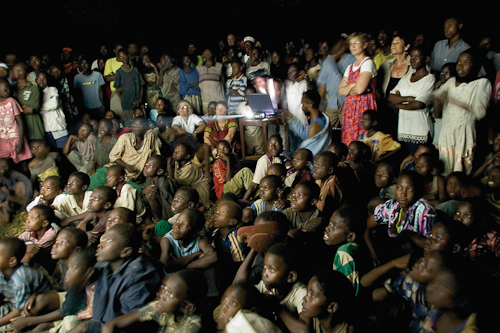
At the same time I had formed a non-profit organization (Bridges to Understanding) whose mission was to give students in remote communities a voice by teaching digital storytelling.  Bridges worked with middle and high school students in India Peru, Guatemala, Kenya, South Africa and Cambodia and gave them a voice by showing them how to upload their stories on the web and share their lives with students in the U.S.   As part of the process we would have the indigenous students present their finished multimedia story to their own community.  For me it was the highlight of the trip.  In Takaungu, Kenya we got a generator and held an outdoor movie night so the students could show their movie to their village.  The crowd went wild and cheered for the film to be shown over and over again.

I just became aware of the organization Tostan’s efforts to address the issue of female genital cutting in Senagal by helping the locals create a film intended for their local community.  Check out Walking the Path of Unity

As I continue to work with media in the developing world I am planning to go in this direction.  I hope to take two to three photojournalism/ film students with me on trips as we help communities in the developing world create their own media for public awareness campaigns targeting social and economic gender issues.

Posted

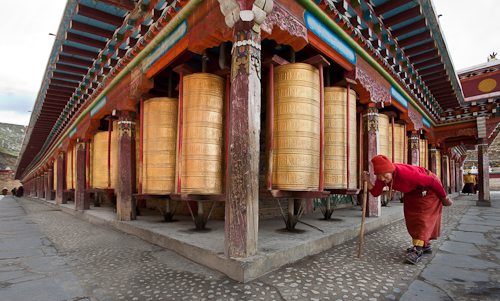
Evidence of the Tibetan daily devotional practice — a practice intended to expand their compassion to include all “sentient beings” and remind them of our “interconnectedness” – is seen everywhere.

Every morning Tibetan Buddhists walk clockwise around various objects of veneration such as monasteries, stupas or sacred mountains.  I’ve watched hundreds of devotee’s make their way around the koras of monasteries and mountains in spite of their arthritic hips, knees or backs.   Many walk for hours keeping track of each circumambulation with prayer beads or small stones placed at the starting point.

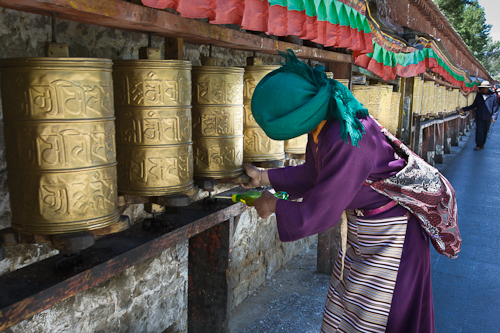
Mani wheels of all shapes and sizes are found everywhere in Tibet.  The mantra “Om Mani Padme Hum” is written on papers inside the wheels as well as the outside.  Spinning the wheels in a clockwise direction helps the devotee focus and calm the mind so they can spread spiritual blessings and well-being.

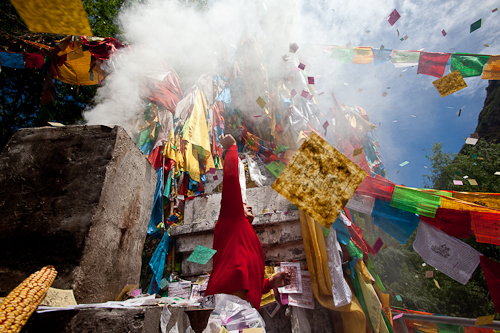
Devotees throw small “mani papers” into the air on mountain passes and various ritual locations to help spread prayers for well being.  Juniper branches are burned for incense and to sanctify the air and help spread the blessings.

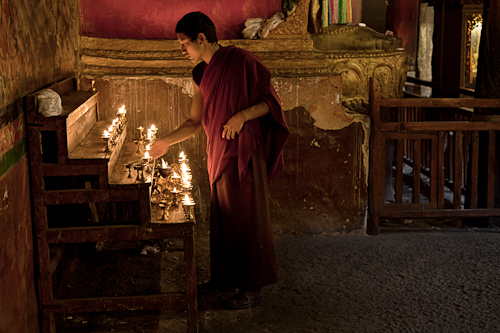
Butter lamps are a conspicuous feature of monasteries and homes throughout Tibet.  Typically Tibetans light a butter lamp every morning and place seven bowls of pure water as an offering before the images on their household shrine.  Pilgrims visiting monasteries supply butter to the burning lamps in order to gain merit.  They use the butter lamps to help focus the mind and aid their meditation.

These devotional practices are part of the Tibetan recipe for well-being and happiness.  While in Tibet I stopped and asked myself “What makes me happy”?  How does my culture guide me in this pursuit?  A diet of new cars; big houses; millionaires and billionaires; young beautiful faces; celebrity and tons of stuff bombard me daily.  This is what I’m encouraged to aspire to in order to set myself apart from the crowd!  What a contrast to the Tibetan pathway that strives to dissolve the “illusion of separateness” by conquering the “self cherishing” attitude.  I think about my own personal ambition and desires and my culture’s dependence on ever expanding economic growth and consumption—a dependence that is being exported to the rest of the world.

Posted

Through my Bridges to Understanding program I have enjoyed teaching digital story telling to students in different countries. I wanted to give them an opportunity to share stories of the issues they faced in their communities. So I was excited when I heard of the work that Anne Medley did in the Congo.

The following is a synopsis of Anne’s experience. Read more about her compelling story by following this link.

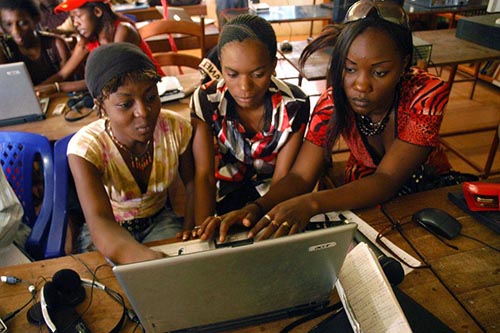
For three months, I taught multimedia journalism — photography, audio and video — to Communications students studying at the Université Chrétienne Bilingue du Congo (UCBC) in the city of Beni in North Kivu province as part of an entrepreneurial education project called “Congo in Focus.” Many of my students had never used audio recorders or video cameras before; few knew about journalism. Yet after several months of hands-on training, they produced great multimedia stories about their community.

So often, foreign journalists in DRC report solely on war, violence against women, poverty and disease. By giving students at UCBC the tools and skills to tell the stories THEY wanted to tell about their communities, I felt like I was helping to empower them not only to expose corruption in their country but also to shed light on the positives.

To feature the students’ work, I created a website (www.congoinfocus.com) where their photo/audio slideshows, videos and blog posts could be viewed. All equipment that I took with me to Congo was donated to the university’s Communications department to enable students to continue telling their own multimedia stories long after my departure.

I initially connected with Congo Initiative (CI) through a friend whose brother worked at the Université Chrétienne Bilingue du Congo (UCBC) in North Kivu province.  I funded my trip through personal savings and donations from family and friends.

My goal is to use my skills in photojournalism and multimedia journalism to aid organizations doing “good” in underrepresented parts of the world. I also want to continue implementing projects like “Congo in Focus” in post-conflict zones around the world.

Anne Medley with Congolese students.

Posted

As a follow up to my November post.

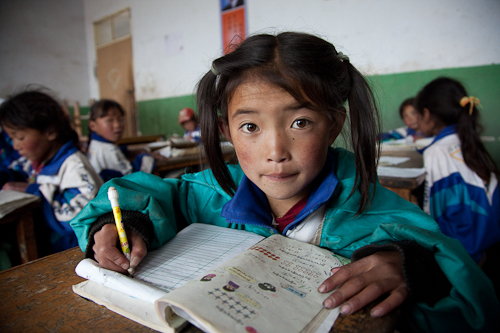
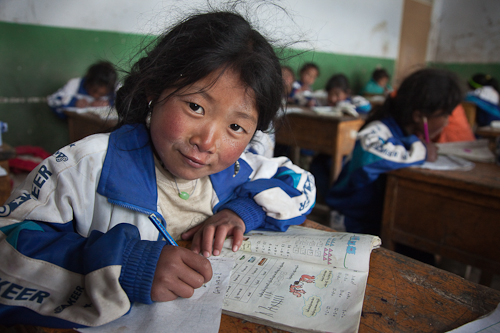
Nine year old Yeshi studying math at boarding school for nomadic children near Dawu in Qinghai Province on the Tibetan Plateau.

In 2007 China made an unprecedented commitment to education by mandating that all children attend school through grade 9. Rural children can now have their compulsory school fees subsidized by the government. A Tibetan family can actually be fined if their children don’t attend school. The Tibetan community has met this historic investment in education with trepidation. In October 2010 thousands of Tibetan students took to the streets in non-violent protest over the recent decision of the Chinese government to have all textbooks written in Mandarin. For the Tibetan people it was seen as just another step, along with massive Chinese immigration, in the steady marginalization of their people and culture.

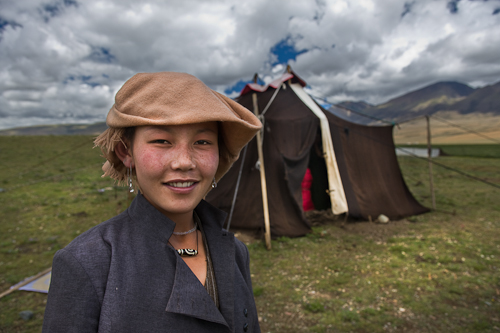
TsoTso, 25 yrs, gets up at 5 am to milk the yaks then does it again at 9 pm. Her full time job is taking care of the families 50 Yaks. She, like most nomads her age, has never gone to school.

For most Tibetans it is important that their children receive education in their Tibetan language and culture. They fear, and rightly so, when their language dies, their culture will die. In this case it is a culture with a spiritual tradition and practice that has developed over centuries and has potential value for us all.

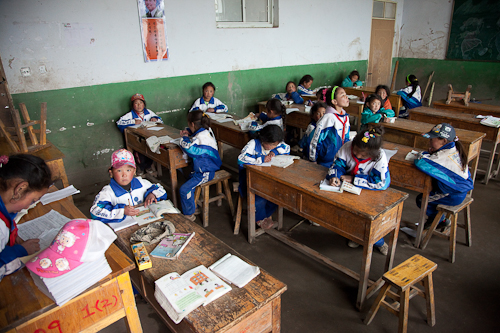
Math class at nomad boarding school. The students typically go home once or twice a month depending on the distance they have to travel.

Bilingual education could be the answer for Tibet, but there are important issues that need to be taken into consideration. For instance, if Tibetan students want to be able to compete academically with Chinese students for post-graduate education slots, they have to be fluent in Mandarin in their selected majors. After the recent student demonstrations there was some indication that the Chinese government would be willing to sit down and discuss the concerns voiced by the student protesters. Recently, the government responded to the student protests by announcing a new policy that will provide 2 years of free bilingual education for rural Tibetan children in preschool. It is a least a start in dealing with this important but complex issue.

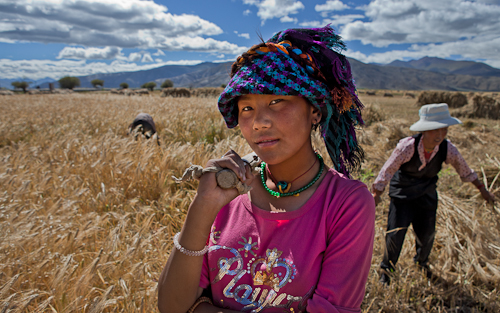
Nima Pinto (16yrs.) is a barley farmer living near Shigatse, Tibet. Like so many rural girls her age she has never been to school.

Posted

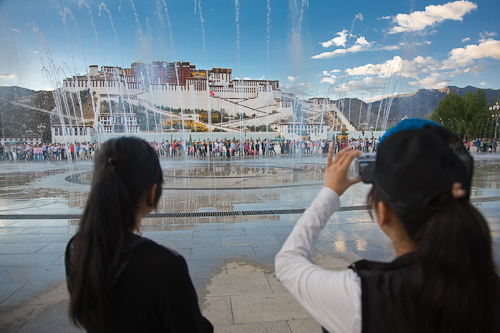
Chinese tourist and the dancing waters at the Potola Palace.

Five and a half million tourists visited Tibet in 2009! This was a 150% increase from the year before. Tibet is currently the number one tourist destination for the Chinese. Certainly the clear mountain air and spectacular scenery offer relief from the air pollution that haunts many of China’s cities. However, it is the Tibetan culture with its rich spiritual heritage that is apparently the major draw.

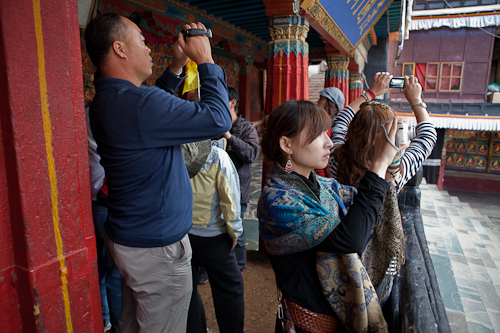
Chinese tour group at Tashilhupo Monastery, Shigatse, Tibet.

While traveling through Eastern and Western Tibet last spring and summer I found many of the most accessible monasteries packed with a constant flow of Chinese tour groups. On the 32 mile kora (clockwise trail) around the sacred Mt Kailash I met a 30 member Chinese group that was being led by a Tibetan Rinpoche . I heard many in the group refer to him as master!

American tourist at Potola Palace.

The strength of Tibet’s tour industry is all the more reason for China to keep the Tibetan culture healthy.

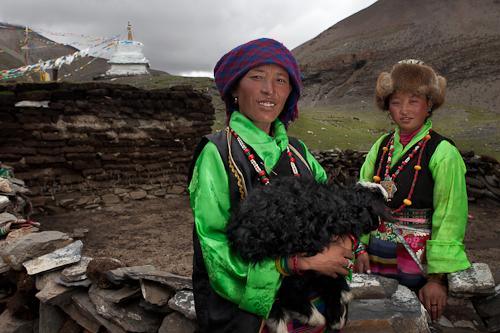
Tibetan nomads dressed up for photos at popular tour bus stop, Nojin, Kangtsang Glacier, Tibet.

Posted

On August 15th the Stirring the Fire exhibition made its debut at the Joan B. Kroc Institute for Peace and Justice at the University of San Diego.  Don’t live in San Diego?  Not to worry, here are some photos of the show!

If you do live in San Diego the exhibition will be up through December 15th.  Do you happen to know a USD student?  Be sure to tell them about the Stirring the Fire Fellowship Opportunity to do an international study, volunteer, internship or service learning project that focus on the issues women and girls face.  The deadline is December 17th.  And if you have seen the show, please let us know how you liked it!

Posted

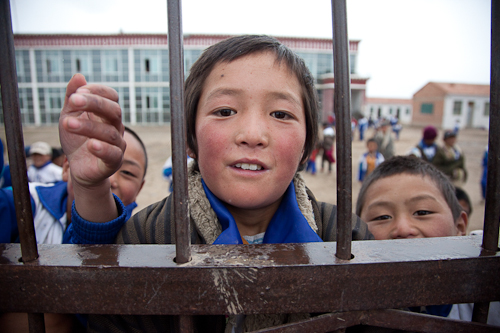
Last month thousands of Tibetan students took to the streets to protest the Chinese Government’s decision to make all elementary and high school education in the official Chinese language, Mandarin.  China has recently mandated that all children go through grade 9 and has plans to increase it to grade 12 soon.  If Tibetan Nomads fail to send their children to school they get fined.

Tsering, age 10, studying math at boarding school for nomadic children

To be fair the Chinese government is not alone in wanting to standardize the language of its citizens.  We have our own debates about bilingual education and we have a history of brutally forcing Native Americans not to speak their native languages.   Then there is the issue of postgraduate education. If Tibetan students do not speak fluent Mandarin it will be virtually impossible for them to pursue an advanced degree.

According to Ken Hale, a professor of linguistics at MIT, there are 6,000 languages spoken on earth today and 3,000 are not spoken by the children.  Every two weeks another elder goes to the grave carrying the last spoken word of an entire culture.  When the language dies the culture dies.  This is a silent extinction in that we scarcely hear about it in the media.  It is our cultural diversity that gives our species its resiliency, creativity and strength.

Nomad children at boarding school

If you spend anytime with the Tibetans you will most likely realize, like I have,
what a special culture they have.  I have never been with a people that return a smile and laugh as readily as they do–having a cultural tradition and devotion grounded in compassion shows.   If there was ever a good argument for a solid bilingual educational curriculum this is it.