
I recently returned from the Copper Canyon located in the Sierra Tarahumara in Northern Mexico where I was documenting the work of the non-profit organization One HEART as they address the high rate of infant and maternal mortality among the indigenous Tarahumara. There are about 70,000 Tarahumara Indians—or Rarámuri—scattered throughout the Sierra living in natural shelters such as caves or cliff overhangs, as well as small cabins of wood or stone.
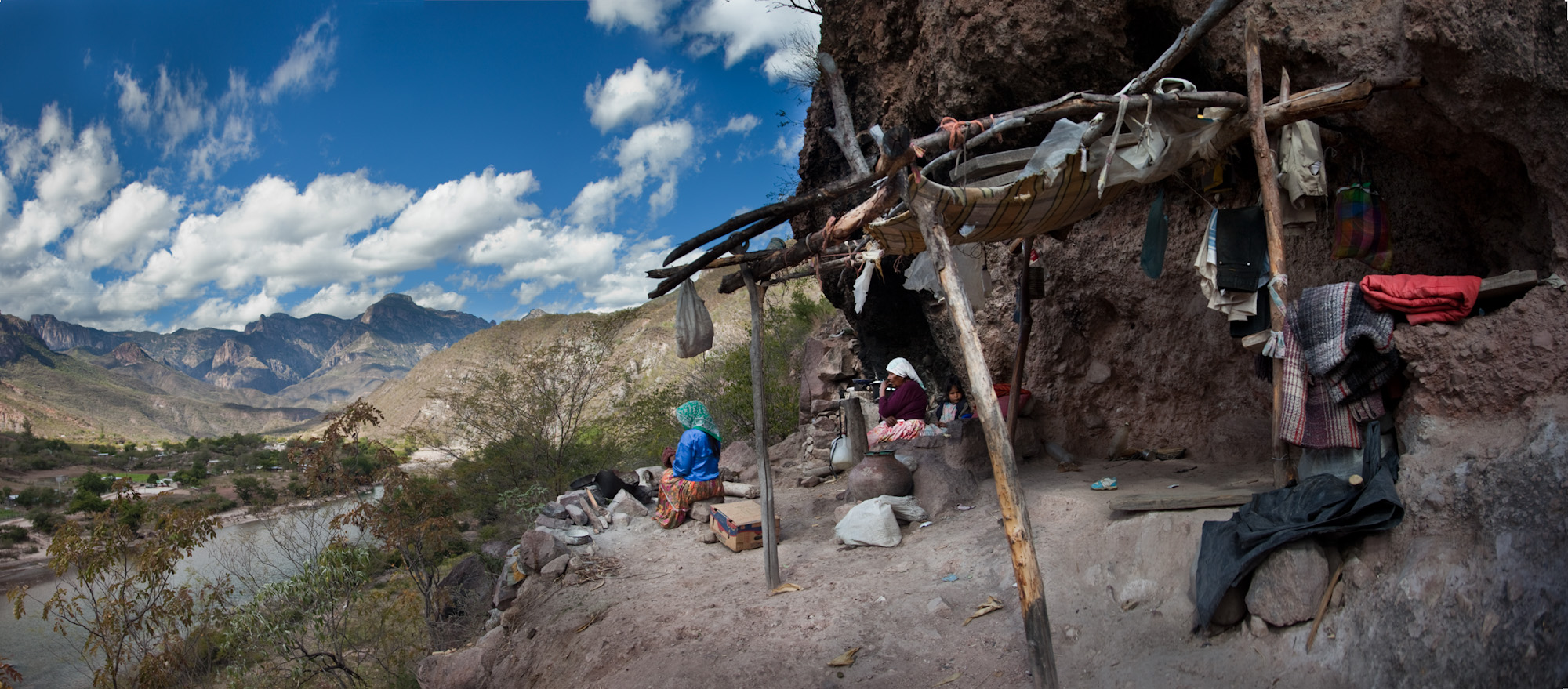
The Rarámuri are best known for their tradition of long distance running up and down the steep canyon trails. Some of their races, which they run in sandals or barefoot, last for days. In fact the Rarámuri are hosting their annual Ultra Marathon on March 7th. I was told that they hunt deer by chasing the animal until it drops from exhaustion.
The One HEART team was welcomed by the Rarámuri with one of their special ritual Yumaré fiestas which lasted all night. Two goats were sacrificed and the women brought ceramic jars filled with tesguino (corn-based beer) that is consumed in many Rarámuri rituals.
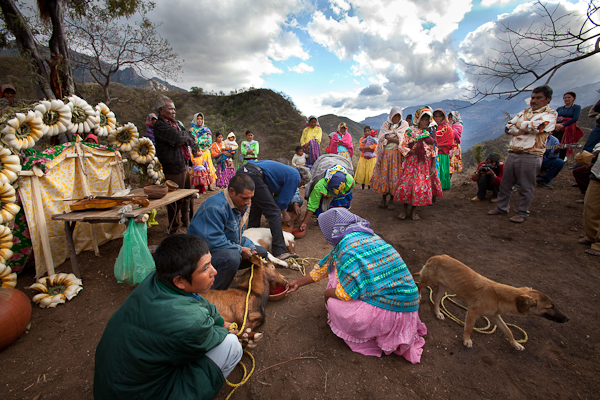
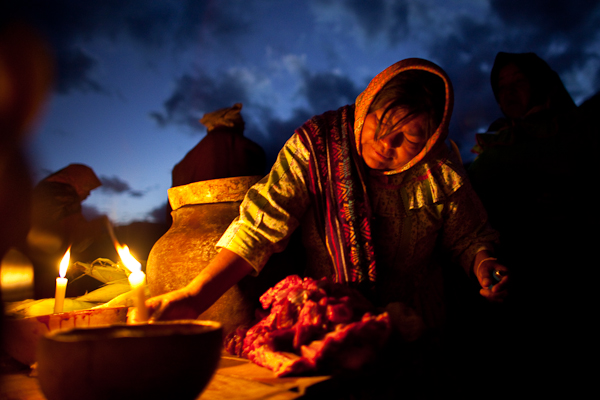
Around 4 am I managed to get an hour of sleep before it began to get light. Although the women did drink a little it was the men who really let their hair down.
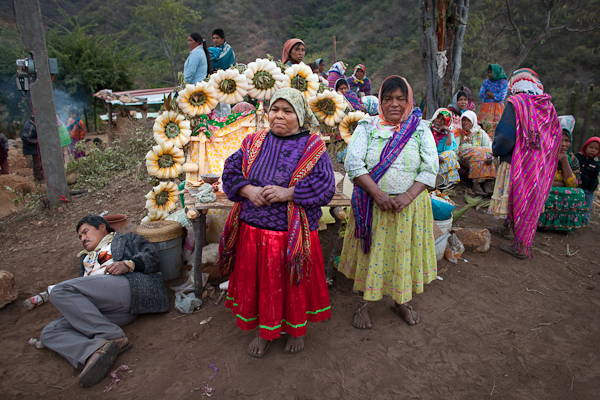
The music and dancing went on all night and as dawn broke it was mainly the women who were left standing.
I have found that preconceived story lines almost always take an unexpected turn and this one certainly has. If you have seen previous post on One HEART you are aware that I started working with them in Tibet. This documentary which I originally thought would portray a successful approach to maternal mortality on the Tibetan Plateau now looks like it will be about the political and cultural hurdles one faces when trying to address issues like maternal and infant mortality in the developing world. The Mexican Government is very receptive to One HEART’s work, however, the drug wars in Northern Mexico and cultural issues with the Rarámuri may pose special problems as One HEART tries to establish its program. For cross-cultural global health programs it’s critical to ensure that there is compatibility between the values of the program and the recipient culture. I hope to document the process One HEART goes through to become aware of and bridge the Rarámuri cultural beliefs and values with our western medical traditions. I will continue to post more about the One HEART story as it unfolds.
Penni Webb
Hi Phil
Once again you are in the midst of a wonderful project and always – great photographs. I hope to do a South American trek this year, love the people, landscape and energy.
Best Always
Penni
Phil Borges
Thanks Penni! I hope you do your trek in South America soon!
Arkadii
Hi Phil.
My friend saw all that spirit in Mexico, and he says that is amazing. I hope You will show us new photo from Mexico.
Arkadii from Ukraine
Phil Borges
Yes, it is amazing. I’m working on more of the photos and will post them as soon as I can.
Ron Rogers
Phil,
I enjoyed your talk this afternoon at the Tibetan Museum and the engaging roundtable discussion that followed. I have been studying your photo’s from Tibet again today, and although I am sure that you hear this all the time – they are very compelling and the individuals in the photo’s seem to somehow communicate their stories visually.
Ron Rogers
Staten Island, NY
Phil Borges
Thank you Ron. I enjoyed being there and I truly appreciate your taking the time to share your thoughts about the photographs.