
There are many who believe that the greatest handicap to development in Muslim Middle Eastern societies is the status and roles they give to women. Nowhere has this been more evident than in one of the poorest and dysfunctional countries in the world—Afghanistan. During the reign of the Taliban essentially all women working outside the home were fired; 7o% of the school teachers, 50% of the civil servants and 40% of the doctors were women. You can imagine what eliminating women from the labor pool did to the function of Afghan society. To make matters worse many of the women were widows because of the lengthy wars in their country. These women were left with no way to support their families.
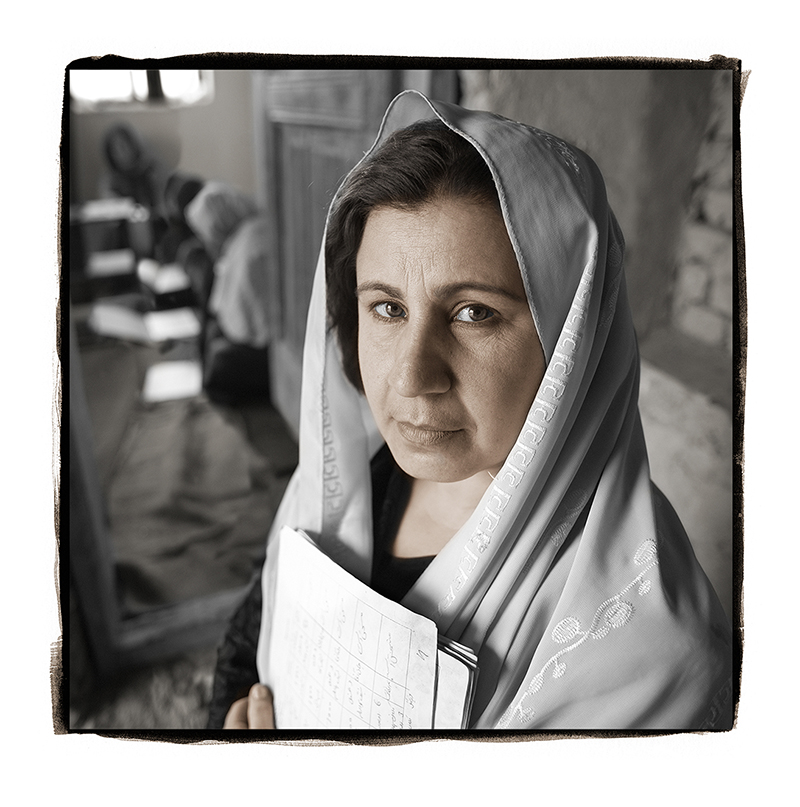 In 2005 I met Fahima, a teacher since 1985. She was one of the thousands of professional women who lost their jobs when the Taliban came to power in 1996. In defiance of the Taliban and at great risk to herself, Fahima opened a clandestine school for young girls. At one point 130 girls were coming to her home each week to study math, science, and the local language, Pushto. When the girls were asked why they were going to Fahima’s house they said she was their aunt. Although harassed by the religious police and threatened with beatings and worse, Fahima continued operating her school for girls until the fall of the Taliban in 2001.
Fahima now helps girls catch up with the education that they missed out on during the reign of the Taliban.
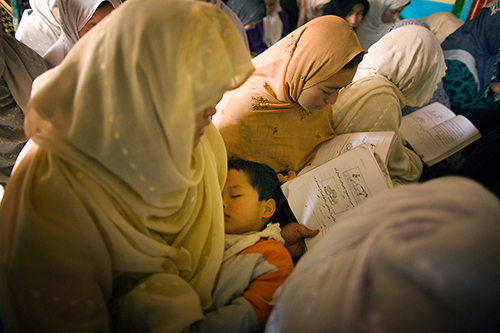
Unfortunately, it is not news, that even with the fall of the Taliban Afghans still face severe challenges. Most children work to help their family survive and few are able to attend school.
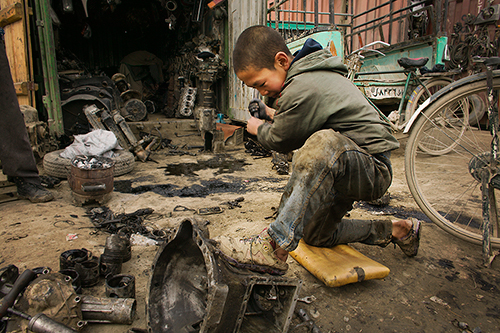
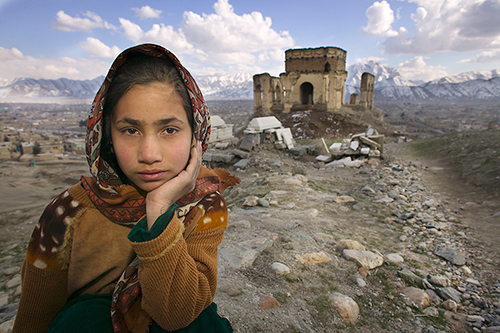
Humaria sells eggs as a street vendor to help her family survive. As with many families in Afghanistan, years of war have left them very poor. Only half of all Afghan children ages 7 to 13 attend school and typically boys are chosen over girls.
“From acid attacks, murder, torching of schools and sexual assault, violence against female students is dashing the dreams of thousands of Afghan girls and women who are thirsty for an education that may help rejuvenate the fractured economy and society of their war-torn country.” From Reuters, Jan. 2009.
Dexter Filkins, a reporter for The New York Times, took a stand to help improve conditions for education in Afghanistan. I highly recommend you read his wonderful story.
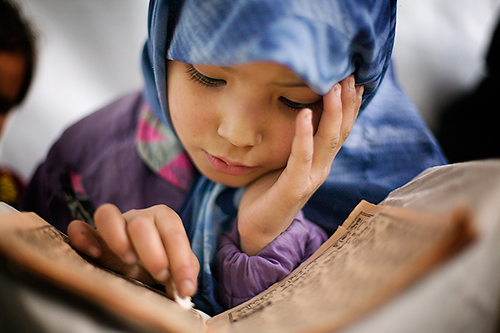
Nafisa was thrilled when she learned she was chosen to attend Salman-e-Fars, a new school recently opened for young girls in Kabul. Girls now make up thirty-four percent of the student population in Afghanistan- a dramatic increase since the Taliban rule, when it was essentially zero.
safi khan agha
salam,
when i read this, it made very happy that Afghan girls had and have such a great,brave,beautiful lady to teach them.
she done lot to afghan girls that is a great job i personally approciate her works .
hope she serve the afghans in the future as well.
Phil Borges
Thank you for your comments. Yes, Fahima is a remarkable woman.
Mominu Islam
It Is Very Good & Very Nice Pic.
Momin bangladesh
+8801711112694
Phil Borges
Thank you very much!