
A guest post from photographer, Michele Zousmer. Michele attended our 2012 Social Documentary Workshop in San Diego and shares her recent experience teaching storytelling to young women in Rwanda.
Four years ago I visited Rwanda with Aegis Trust, a Genocide Foundation to document testimonies of women survivors of the 1994 Genocide; a genocide that slaughtered 1 million people in 100 days. With every interview I was taken by how these women were so traumatized and would never tell their story if their children were around.
During my time in Rwanda I also met and photographed a young girl named, Dydine.
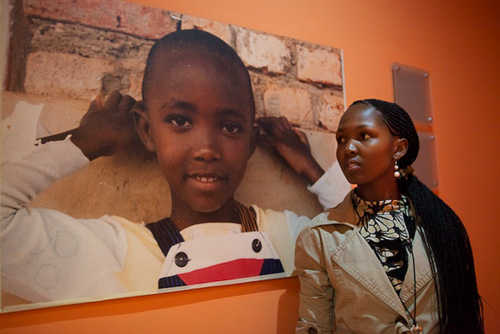
Dydine
Dydine is a child of a survivor, 1 of 4 siblings, who returned to Kigali from a Ugandan refugee camp after the genocide. She is an amazing young lady who has big dreams and feels very strongly about helping to create peace and change in her country. She started an NGO “Umbrella Cinema Promoters” because of her love of filmmaking. Her mission is to locate and identify women who are isolated and need to use cinema to share their experiences, talents and feelings on how to overcome gender discrimination.
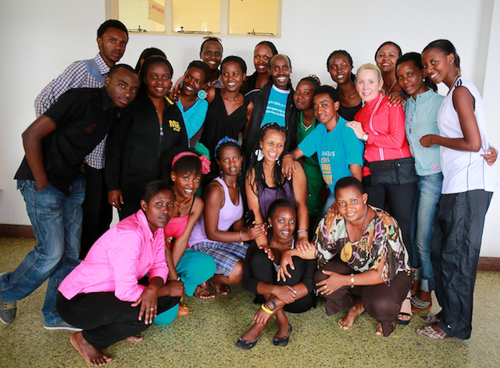
Workshop Participants
Dydine and I have kept in touch over the years and I was invited to return to Rwanda to be a special mentor in a workshop called “Women’s Potential in Cinema.” Dydine selected 15 young women to be in this workshop. I was assisted by some wonderful local filmmakers and acting coaches. We taught about the importance of filmmaking, storytelling, videography, sound and acting. I learned that these young women had never even been in a movie theater before, as there are none in Kigali yet. I actually used the 2 films that were made in my San Diego workshop on microfinance as demonstrations. They especially loved the one of Nancy and her bakery. I was able to point how the camera told the story of where she lived, what she did and how she wanted to further her business. Since women in the workplace is a new reality for women in Rwanda this hit home.
One of the most interesting things I observed in this workshop was that these women walked in with lots of walls up. In Rwanda people are not open and do not allow strangers to get close to them. This is an affect of the genocide where neighbors turned on each other. This feeling pervades the entire country. After 2 days in the classroom these walls were broken down. There was sharing and laughing and new friendships formed. For me this was a wonderful addition to the workshop and one that I shared at the closing ceremonies of WPC’s 1st workshop. If more workshops were offered to the young people in Rwanda I believe that change and peace can happen. Dydine and I are already planning to do another workshop next year.
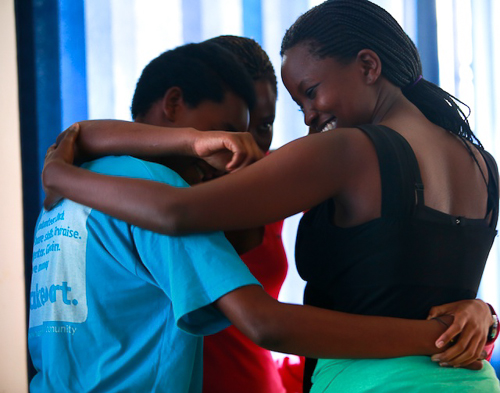
Young Women Together
Georgia Cammann
I remember exactly what I was doing 20 years ago when I first heard the news about the horrific genocide in Rawanda between the Hutus and Tutsis at that time. I had no particular ties to that area of the world but I was struck to my core with the darkness of those events… what mankind is capable of visiting on itself and also as time went on… the awe-inspiring stories of survival that sprung forth. Landing last year at the Kilgali airport… I couldn’t help but feel the energy of all that land has held onto in it’s history. I really appreciate your work there!
Phil Borges
The strength of the women in Rwanda really is amazing. As is Michele’s work!